
Inside the Boot Factory: How Quality Boots Are Made
Discover the craftsmanship behind every stitch, sole, and seam. From leather selection to final inspection, see what makes a boot factory the heart of footwear quality.
START EXPLORINGBoot Factory Philosophy: A great pair of boots doesn't happen by accident. Behind every durable work boot, every comfortable hiking boot, and every timeless leather boot is a factory floor where skilled hands and precision machines work in harmony. Understanding how boots are made helps you appreciate the craftsmanship — and make smarter buying decisions.
What Is a Boot Factory?
A boot factory is a specialized manufacturing facility where raw materials — primarily leather, rubber, synthetic fabrics, and hardware — are transformed into finished footwear. Unlike mass-market shoe production lines that prioritize speed, a dedicated boot factory focuses on durability, structural integrity, and fit. These factories range from small artisanal workshops producing benchmade boots to large-scale operations that supply major workwear and outdoor brands.
The best boot factories share a common trait: they treat construction methods as non-negotiable. Whether it's a Goodyear welt line or a cemented construction unit, each station is designed to reinforce the boot's weakest points — the sole junction, the heel counter, and the toe box.
If you've ever wondered why a pair of durable work boots costs more than a generic pair of shoes, the answer often lies in the factory. More steps, better materials, and stricter quality control all add up.
The Boot Manufacturing Process: Step by Step
Every boot factory follows a sequence of production stages. While the exact order can vary depending on the style — a black military boot vs. a vintage cowboy boot — the core steps remain remarkably consistent.
Design & Pattern Making
Designers create the boot's silhouette, then pattern makers translate it into flat templates for cutting.
Leather Selection & Cutting
Hides are inspected for flaws, then die-cut into upper, lining, and reinforcement pieces.
Stitching & Assembly
Uppers are sewn together, eyelets and hooks installed, and linings attached.
Lasting
The assembled upper is pulled over a last (foot-shaped mold) and tacked into shape.
Sole Attachment
Welting, cementing, or direct injection — the sole is bonded or stitched to the upper.
Heel & Finishing
Heels are attached, edges trimmed, soles buffed, and the boot is polished.
Quality Control
Each pair is inspected for stitching defects, sole alignment, and overall finish.
Packaging & Shipping
Boots are boxed, labeled, and sent to retailers or direct-to-consumer fulfillment centers.
In a high-volume factory, these steps happen on a moving line. In a smaller workshop — like those producing benchmade boots (if applicable) or vintage-style boots — the same steps are performed at individual stations, often by a single craftsman.
Key Construction Methods Used in Boot Factories
Not all boot factories build boots the same way. The construction method determines how repairable, waterproof, and durable the final product will be.
Goodyear Welt
The gold standard for repairable footwear. A strip of leather (the welt) is stitched to the upper and insole, then the sole is stitched to the welt. This creates a water-resistant seal and allows the sole to be replaced multiple times. Factories that specialize in Goodyear welt construction often produce Oxford boots, wingtip boots, and premium men's black cowboy boots.
Cemented Construction
The upper is glued to the sole. Faster and cheaper, but less repairable. Common in fashion boots, cute rain boots, and budget-friendly casual boots for women.
Blake Stitch
A single stitch runs through the upper, insole, and sole. Slimmer and more flexible than Goodyear welt, often used in fashion boots and block heel ankle boots.
Direct Injection
Molten rubber or PU is injected directly onto the upper. This is how most safety footwear, duck feet shoes, and neoprene boots are made. Highly waterproof, but not resoleable.
Factory Insight
A boot factory that offers resoling services is a strong signal of quality. If the factory can rebuild the boot, it was built to last. This is common with ranger boots, tanker boots, and climbing boots.
Materials You'll Find in a Boot Factory
The materials a factory chooses define the boot's character. Here's what goes into the average production line:
- Full-grain leather: The highest quality hide, used in leather high knee boots, harness boots, and equestrian boots.
- Top-grain leather: Slightly sanded for uniformity, common in stylish boots for men and pointy boots.
- Suede and nubuck: Sanded for a velvety finish, popular in faux fur boot styles and 70s boots.
- Rubber and PVC: Used in yellow rain boots, black rain boots, and farm boots.
- Steel and composite toe caps: Essential for steel boots, composite toe, and men's steel toe shoes.
- Hardware: Buckles, zippers, and studs for buckle boots, studded boots, and biker boots men.
Factories that source leather from reputable tanneries often stamp the inside of the boot with a tannery code. This is a mark of transparency and quality.
Quality Control: What Happens Before a Boot Leaves the Factory
Quality control (QC) is the final gatekeeper. In a well-run boot factory, QC isn't just a final inspection — it's integrated into every station. Workers check stitching tension, leather consistency, and sole alignment as the boot moves down the line.
Common QC checks include:
- Stitch density: Too few stitches per inch weakens the seam; too many can tear the leather.
- Lasting accuracy: The upper must be pulled evenly over the last to avoid wrinkles or distortion.
- Sole bond strength: For cemented boots, the bond is pull-tested. For welted boots, the welt stitch is inspected.
- Heel attachment: Heels must be level and secure, especially on platform heel boots and Cuban heel boots.
- Symmetry: Left and right boots must match in height, width, and finish.
When you buy from a factory that publishes its QC standards — or from a brand that owns its factory — you're paying for consistency. That's why durable walking boots from established factories often outlast cheaper alternatives.
Why Understanding Boot Factories Helps You Buy Better
Knowing how boots are made gives you a serious advantage as a buyer. Here's how:
- You can spot quality: A Goodyear welt is visible on the outside. If you know what to look for, you can separate a $150 boot from a $400 boot in seconds.
- You understand pricing: A boot made in a factory with 50 steps will cost more than one made with 15. That's not marketing — it's labor and materials.
- You choose repairability: If a factory builds boots that can be resoled, you're buying a product that can last a decade or more. Look for brands that mention their factory's construction method.
- You avoid greenwashing: Factories that prioritize sustainability — vegetable-tanned leather, water-based adhesives, ethical labor — are often transparent about their processes.
Whether you're shopping for safety footwear, ice boots, or fashion boots, the factory behind the boot tells a story. Learn to read it.
Factory vs. Workshop vs. Brand: What's the Difference?
The term "boot factory" gets used loosely. Here's a quick breakdown:
Factory: A large-scale production facility. Usually produces for multiple brands. High output, standardized processes.
Workshop: A smaller facility, often focused on benchmade or handmade boots. Lower output, higher craftsmanship, often direct-to-consumer.
Brand: The name on the box. Some brands own their factories; others contract with third-party factories. Brands that own their factory have more control over quality.
For example, a boots shop might sell boots from three different factories. A direct-to-consumer brand might sell boots from one factory it owns. Neither is inherently better — but knowing the difference helps you set expectations.
Some factories specialize in specific categories. A factory that makes climbing boots may not make Victorian boots. A factory that makes Santa boots may not make tanker boots. Specialization is a good sign — it means the factory has mastered a particular construction method or material.
Recommended Boot Factory Favorites
⚠️ AFFILIATE DISCLOSURE: This website contains affiliate links. As an affiliate Associate, we earn from qualifying purchases. If you make a purchase through these links, we may receive a small commission at no additional cost to you. Read our full affiliate policy.

Furuian Steel Toe Work Boots for Men Women Safety Construction Shoes | Lightweight Feel, Cushioned Every Step, Reliable Grip, ASTM Certified, Ready for Factory, Warehouse, and Outdoor Work
Check price on Amazon
Dunlop Protective Footwear, Chesapeake plain toe Black Amazon, 100% Waterproof PVC, Lightweight and Durable, 8677577.11, Size 11 US
Check price on Amazon
GUSAYEX Men's Steel Toe Work Boots, Puncture Resistant, Mid-Ankle | ASTM Certificated Safety Boots, Wear-Resistant Rubber Outsole, Mid-Ankle, Construction, Industrial work, Warehouse, Factory
Check price on Amazon
Boot Factory
Check price on Amazon
The Boot Factory
Check price on Amazon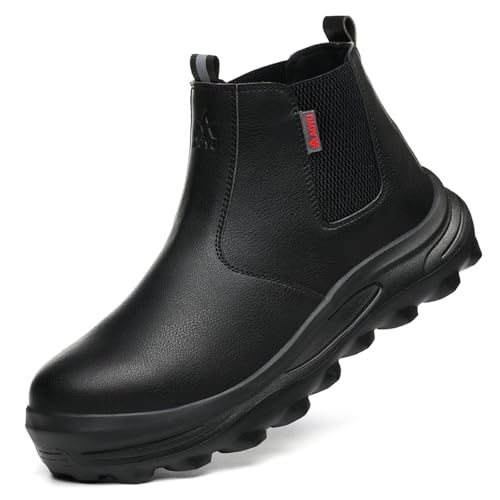
KAIDISEN Slip On Steel Toe Work Boots for Men Women Lightweight Non-Slip | Comfy Water Resistant Chelsea Safety Shoes, Rubber Sole Work Boots for Construction Factory Garden, Black & Brown
Check price on AmazonFrequently Asked Questions About Boot Factories
What is the largest boot factory in the world?
The largest boot factories are typically located in China, Vietnam, and India, producing millions of pairs annually for global brands. However, the most renowned factories for premium boots are often smaller, family-owned operations in the United States, Italy, and England.
How can I tell if a boot was made in a good factory?
Look for signs of quality construction: even stitching, a welt (for welted boots), a leather insole, and a heel that's attached with nails or screws rather than just glue. Brands that own their factory often share behind-the-scenes content.
Are factory-made boots worse than handmade boots?
Not necessarily. A well-run factory with strict QC can produce boots that rival handmade ones in durability. The key difference is often in customization and repairability, not inherent quality.
What does "factory second" mean?
Factory seconds are boots that failed final QC — usually due to minor cosmetic flaws like uneven dye or a small stitch irregularity. They're structurally sound but sold at a discount. If you're looking for value, factory seconds can be a great option.
Final Thoughts: The Factory Behind the Boot
Every boot tells a story — and that story begins in a factory. From the first cut of leather to the final polish, the factory floor is where raw materials become footwear you can trust. Whether you're drawn to outdoor boots, vintage boots, or stylish boots for men, understanding the manufacturing process empowers you to choose wisely.
Next time you lace up, take a moment to appreciate the craftsmanship. And when you're ready to buy, let your knowledge guide you to a pair that's built to last.