
Boots Price to Quality: What Are You Really Paying For?
Every pair of boots tells a story of materials, craftsmanship, and intended use. Understanding the price-to-quality relationship helps you avoid overpaying for branding—and underpaying for durability. This guide breaks down exactly what your money buys at every price point.
Start Your Boot ResearchThe Core Truth: Price and quality are correlated—but not perfectly. A $250 boot from a direct-to-consumer brand can outperform a $450 boot from a legacy label. The key is knowing which construction methods, materials, and features actually justify a higher price tag. This guide teaches you to read the signals.
Why Price Doesn't Always Equal Quality
The boot market is complex. Two boots sitting side by side on a shelf can look nearly identical yet differ wildly in how they're made, how long they'll last, and whether they're worth their asking price. A men's boot priced at $180 might use cemented construction and corrected-grain leather, while a similarly styled ladies' boot at $320 could feature Goodyear welt construction and full-grain leather. Without understanding these differences, you're essentially guessing.
This guide exists to remove the guesswork. We'll examine the actual components that drive cost—materials, construction, hardware, and labor—so you can evaluate any boot at any price point with confidence. Whether you're shopping for comfortable work boots for wide feet or a pair of women's Chelsea boots, the principles remain the same.
Boot Price Tiers: What to Expect at Every Level
Before diving into specific components, it helps to understand the broad landscape. The following table breaks down what you can realistically expect at each price tier—from budget-friendly options to investment-grade footwear.
| Price Tier | Typical Range | Materials & Construction | Expected Lifespan | Best For |
|---|---|---|---|---|
| Budget | $50–$120 | Genuine leather (often corrected grain), cemented sole, synthetic lining, basic hardware | 1–2 years with regular wear | Occasional wear, fashion-forward styles, first boots |
| Mid-Range | $120–$250 | Full-grain or top-grain leather, cemented or Blake stitch, partial leather lining, better hardware | 2–4 years with care | Daily wear, men's casual boots, entry-level work boots |
| Premium | $250–$600 | Full-grain leather, Goodyear welt or stitchdown, full leather lining, quality hardware, resolable | 5–10+ years with proper care | Daily wear, comfortable waterproof walking boots, serious work use |
| Luxury | $600–$1,500+ | Shell cordovan or exotic leathers, hand-welted construction, bespoke details, artisan finishing | 10–20+ years with care | Investment pieces, black leather knee-high boots with heel, collector footwear |
This table isn't absolute—there are exceptions in every direction. Some boots on sale from premium brands drop into mid-range pricing, offering exceptional value. Conversely, some fashion brands charge premium prices for boots that are constructed like budget pairs. The lesson? Learn to evaluate the boot, not the price tag.
The 5 Factors That Actually Determine Boot Quality
When you pick up a boot, what should you look for? These five factors account for the vast majority of quality differences between price points.
1. Leather Type & Grade
Full-grain leather is the gold standard—it retains the hide's natural fibers, ages beautifully, and resists moisture. Top-grain is sanded and corrected, removing imperfections but also durability. Corrected-grain (often called "genuine leather" on labels) is the lowest grade, with a plastic-like finish that cracks over time. If the price seems too low for the style, it's likely corrected-grain.
For boots that will see real use, look for full-grain. Brands like Brown's Boots and Benchmade Boots are known for using high-grade leathers that justify their pricing.
2. Construction Method
Cemented construction (glued soles) is the most common and least expensive. It's fine for fashion boots but limits resoleability. Blake stitch is a step up—stitched through the sole—but still difficult to resole. Goodyear welt is the gold standard: a welt strip is stitched to the upper and insole, then the sole is stitched to the welt. This allows multiple resoles, extending boot life by years. Stitchdown is another premium method, often used in walking boots and work styles.
If a boot is priced above $250 and doesn't mention welt construction, ask why.
3. Hardware & Components
Zippers, eyelets, hooks, and buckles matter more than most people realize. Cheap zippers fail first, and painted hardware chips quickly. Quality boots use solid brass or antique-finished hardware that patinas rather than peels. Leather Chelsea boots live or die by their elastic gore—cheap elastic loses rebound and becomes loose. Likewise, the shank (internal support) should be steel or fiberglass in quality boots, not plastic.
4. Lining & Interior
Fully leather-lined boots breathe better, wick moisture, and feel more luxurious. Partial lining (often just the heel and toe) is a cost-saving measure that's acceptable in mid-range boots. Synthetic linings are common in budget boots and can cause odor and overheating. For comfortable waterproof Chelsea boots or waterproof hiking boots, the lining is critical to performance.
5. Manufacturing Origin & Labor
Where a boot is made significantly affects cost. Boots made in the USA, UK, or Europe carry higher labor costs but often superior quality control. Asian-manufactured boots can be excellent—many premium brands produce there—but the lowest-cost factories cut corners. Steel toe boots for welders and other safety footwear must meet specific standards regardless of origin, so focus on certifications rather than country alone.
Price-to-Quality by Boot Category
Different boot types have different price-to-quality dynamics. Here's how to evaluate value in the categories you're most likely shopping.
Work Boots
- $100–$180: Basic protection, cemented sole, 1–2 year lifespan. Acceptable for light duty.
- $180–$300: Goodyear welt or stitchdown, full-grain leather, safety toe options. The sweet spot for daily work.
- $300–$500: Premium USA-made, resolable, advanced comfort systems. Worth it if you're on your feet 8+ hours daily.
For specific needs, explore steel toe boots for wide feet, moc toe pull-on work boots, or composite toe work boots.
Fashion & Dress Boots
- $80–$150: Often corrected-grain leather, cemented. Fine for occasional wear but won't age well.
- $150–$350: Full-grain or suede, Blake or welt construction. Great value if you want style plus longevity.
- $350–$800: Designer labels, premium leathers, hand-finishing. You're paying for brand as much as quality.
For style-focused options, see women's cap toe boots, kitten heel boots, or gold boots.
Hiking & Outdoor Boots
- $80–$150: Entry-level, often synthetic, limited waterproofing. Good for casual trails.
- $150–$280: Quality membranes (Gore-Tex or similar), Vibram outsoles, proper ankle support. Best value for regular hikers.
- $280–$450: Premium leather, advanced support systems, resoleable. For serious backpackers and winter hiking boots.
Related: women's hiking boots for plantar fasciitis, waterproof hiking boots for women.
Western & Cowboy Boots
- $100–$200: Often corrected-grain or split leather, synthetic lining. Fashion-first.
- $200–$400: Full-grain leather, leather lining, Goodyear welt. The quality standard for regular wear.
- $400–$1,000+: Exotic leathers (alligator, python), handmade, collector-grade. See alligator boots and python boots.
Also consider cowboy work boots, steel toe cowboy boots, and snakeskin boots.
Red Flags & Green Flags When Evaluating Boots
Use this quick reference to assess any pair of boots before you buy.
🚩 Red Flags (Overpriced for Quality)
- Label says "genuine leather" but doesn't specify full-grain or top-grain
- No mention of construction method on a boot priced above $200
- Sole is glued (cemented) with no stitching visible
- Lining is synthetic (polyester, nylon) on a "premium" boot
- Hardware feels lightweight or is painted rather than solid metal
- Boot weighs surprisingly little for its size—suggests cardboard or foam internal components
- No resole option or warranty information available
✅ Green Flags (Fair Price for Quality)
- Specific leather type named (full-grain, top-grain, suede, etc.)
- Construction method clearly stated (Goodyear welt, Blake stitch, etc.)
- Visible stitching on the sole or welt
- Leather or breathable textile lining
- Solid brass or quality metal hardware
- Resoleable design with available cobbler support
- Clear warranty and satisfaction guarantee
- Brand has a reputation for quality control and customer service
Smart Shopping Strategies for Maximum Value
Getting the best price-to-quality ratio isn't just about what you buy—it's about how and when you buy.
Buy Off-Season
Winter boots are cheapest in spring. Summer styles drop in fall. If you're not in immediate need, timing your purchase can save 30–50%. Check boots on sale sections regularly.
Consider Previous Season Models
Boot brands often refresh colors and minor details annually. Last year's model is often identical in quality but significantly cheaper. Women's cowboy boots on sale are a great example of this strategy.
Research the Brand's Reputation
A brand's track record matters more than any single product description. Look for brands with consistent quality control and responsive customer service. Forums and review sites are invaluable here.
Factor in Maintenance Costs
A $300 boot that lasts 8 years costs less per year than a $100 boot that lasts 2. Include care products like leather boot cleaner and conditioner and potential resoling in your total cost calculation.
Get the Fit Right
The best boots are worthless if they don't fit. A proper fit prevents blisters, extends boot life, and ensures comfort. If you have specific needs, look for comfortable work boots for plantar fasciitis or shock-absorbing boots.
Buy from Retailers with Good Return Policies
Fit and comfort can only be truly assessed after wearing. A generous return policy protects your investment. This is especially important for walking boots and boots you'll wear for extended periods.
Best Value Boots: Our Top Picks
⚠️ AFFILIATE DISCLOSURE: This website contains affiliate links. As an affiliate Associate, we earn from qualifying purchases. If you make a purchase through these links, we may receive a small commission at no additional cost to you. Read our full affiliate policy.

OLPDDZ 1000PCS White Blank Unstrung Price Tags, 1.75 x 1.093 Inches - Premium Quality Durable Paper Hang Tags for Clothing, Retail, Yard & Garage Sales, Ideal for Gift Labeling and Sale Pricing
Check price on Amazon
HGWNQX 4 Packs Boot Shapers, 2 Pairs 14 Inches Boot Shaper Inserts for Women and Men, Black Stand up Tall Boot Shapers Insert Boot Fillers to Keep Shape for Ankle, Mid-calf Leather and Tall Boots
Check price on Amazon
Dr. Scholl's Advanced Pain Relief Plantar Fasciitis Orthotic Insoles | Heavy duty support for plantar fasciitis & arch support, shock-absorbing, supports up to 340 lbs, for work shoes & boots
Check price on Amazon
Height Increase Insoles, 2-Layer Height Boosters & Shoe Lifts for Men | Unisex Insoles for Men & Women with Removable Heel Layer; Trim-to-Fit PVC for Sneakers, Boots, Dress Shoes & Work Shoes
Check price on Amazon
Georgia Boot Men's 8' Lace-to-Toe Work Boot-M, Chocolate, 12 W US
Check price on Amazon
Western Chief Kid's Freestyle Neoprene Snow Boot, Olive, 13 | Toddler to big kid sizes boots for boys and girls with fleece lining, EVA insole and traction for rain, snow and outdoor play
Check price on Amazon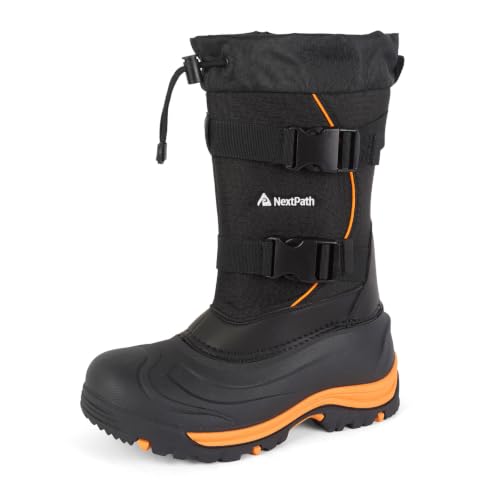
Nextpath Men's Snow Boots, Waterproof Insulated Winter Boots for Men, -40°F
Check price on Amazon
Coume 30 Pieces (15 Pairs) Boot Shapers Form Inserts, 10 Inch, Clear | to Keep Shoes Shape, Tall Boots Support Holders for Women Men Adults, Prevent Folding Wrinkles, Storage Closet Organizer
Check price on AmazonThe Bottom Line: Price vs. Quality
Price is a starting point, not a final answer. A $150 boot with full-grain leather and Goodyear welt is a better value than a $400 boot with corrected-grain leather and a glued sole. Use the five factors—leather type, construction method, hardware, lining, and origin—to assess any boot objectively.
For most people, the $200–$400 range offers the best balance of quality, durability, and fair pricing. Below that, expect compromises. Above that, diminishing returns set in—you're often paying for brand prestige, exotic materials, or handcrafted details that don't affect daily performance.
Whether you're buying boots for men, ladies' leather boots, or specialized footwear like wader boots or men's dirt bike boots, the same evaluation principles apply. Learn to read the boot, and you'll never overpay again.
Browse Our Recommended BootsFrequently Asked Questions
Related Reading
Expand your boot knowledge with these related guides:
- Boots Starter Hub — Begin your boot journey here.
- Boot Purchase Guides — Comprehensive buying advice for every type.
- First Boot Checklist — Don't miss essential features when buying.
- Boot Feature Glossary — Understand technical boot terminology.
- Boots Break-In Guide — Learn how to break in new boots comfortably.
- Boot Care & Maintenance — Protect your investment with proper care.
- Budget-Friendly Picks — Best boots under $150.
- Best Value Guide — Maximum quality for your money.