Boots Fit Measurement: The Complete Guide to Finding Your Perfect Size
Stop guessing your boot size. Learn how to measure your feet accurately at home and get the perfect fit for every pair of boots you buy.
START MEASURINGWhy Fit Matters: A properly fitted boot prevents blisters, improves circulation, and provides essential support for your feet and ankles. Whether you're buying work boots for long shifts or hiking boots for rugged trails, accurate measurements are the foundation of comfort and performance.
Why Accurate Boot Measurements Matter
Most people wear boots that are either too tight or too loose. The consequences range from minor discomfort to serious foot problems like bunions, blisters, and even chronic pain. Unlike sneakers, boots often have a rigid structure, and the wrong size can cause lasting damage. That's why understanding boot fit measurement is the single most important step in your buying journey.
Your feet change over time due to age, weight fluctuations, and activity levels. A size you wore five years ago may no longer be accurate. Additionally, different boot styles require different fit considerations. A Chelsea boot fits differently from a combat boot, and wide calf boots have unique measurement requirements altogether.
This guide will walk you through every aspect of measuring your feet for boots, from basic length and width to advanced considerations like arch type and volume. By the end, you'll have the confidence to order any pair of boots online without hesitation.
How to Measure Your Feet for Boots: Step-by-Step
Follow these steps carefully to get the most accurate measurements possible. You'll need a piece of paper, a pen or pencil, a ruler, and a friend to help if possible.
Measure at the Right Time
Always measure your feet at the end of the day, when they are at their largest. Feet swell throughout the day due to activity and gravity, so measuring in the morning could result in boots that feel tight by afternoon.
Wear the Right Socks
Wear the socks you plan to use with your boots. Boot socks vary significantly in thickness. A thin dress sock versus a thick wool sock can change your size by half a size or more.
Trace Your Foot
Place a piece of paper on a hard floor against a wall. Stand with your heel against the wall. Have someone trace the outline of your foot with a pen, holding it perpendicular to the paper. Repeat for both feet.
Measure Length
Use a ruler to measure from the heel of the tracing to the longest toe. Measure both feet and use the larger measurement. Most people have one foot slightly larger than the other.
Measure Width
Measure the widest part of your foot tracing, typically across the ball of your foot. This measurement determines whether you need a standard, wide, or narrow boot width.
Measure Your Arch
Determine your arch type by looking at your footprint. A normal arch shows a moderate curve, a flat foot shows almost no curve, and a high arch shows a deep curve. This affects your arch support needs.
Boot Size Conversion Chart
Use this table to convert your foot length in inches or centimeters to US, UK, and EU boot sizes. Note that sizes can vary slightly between brands and boot types.
| Foot Length (in) | Foot Length (cm) | US Men's | US Women's | UK | EU |
|---|---|---|---|---|---|
| 9.25" | 23.5 cm | 6 | 7.5 | 5.5 | 39 |
| 9.5" | 24.1 cm | 6.5 | 8 | 6 | 39.5 |
| 9.75" | 24.8 cm | 7 | 8.5 | 6.5 | 40 |
| 10" | 25.4 cm | 7.5 | 9 | 7 | 41 |
| 10.25" | 26.0 cm | 8 | 9.5 | 7.5 | 41.5 |
| 10.5" | 26.7 cm | 8.5 | 10 | 8 | 42 |
| 10.75" | 27.3 cm | 9 | 10.5 | 8.5 | 43 |
| 11" | 27.9 cm | 9.5 | 11 | 9 | 43.5 |
| 11.25" | 28.6 cm | 10 | 11.5 | 9.5 | 44 |
| 11.5" | 29.2 cm | 10.5 | 12 | 10 | 44.5 |
| 11.75" | 29.8 cm | 11 | 12.5 | 10.5 | 45 |
| 12" | 30.5 cm | 11.5 | 13 | 11 | 46 |
| 12.25" | 31.1 cm | 12 | 13.5 | 11.5 | 46.5 |
| 12.5" | 31.8 cm | 12.5 | 14 | 12 | 47 |
| 12.75" | 32.4 cm | 13 | 14.5 | 12.5 | 48 |
Understanding Boot Width
Width is just as important as length, yet many buyers overlook it. A boot that's the correct length but too narrow will cause pinching and pain, while one that's too wide will allow your foot to slide, leading to blisters and instability.
Boot widths typically range from narrow (B) to extra-wide (4E or EEEE). The width you need depends on your foot measurement across the ball. Here's a general guide:
- Narrow (B): Foot width of 3.5–4 inches at the ball. Often needed by people with slim feet who struggle with leather boots feeling too loose.
- Standard (D): Foot width of 4–4.5 inches. The most common width for men's boots and the default for most work boots.
- Wide (2E): Foot width of 4.5–5 inches. Suitable for those who find standard boots too tight across the ball.
- Extra-Wide (4E): Foot width of 5+ inches. Essential for people with very wide feet or conditions like bunions.
For women, widths are often labeled differently, but the principle is the same. Many brands now offer specific wide calf boots and wide-width options for better fit. If you have diabetic footwear needs or suffer from plantar fasciitis, getting the width right is especially critical.
Fit Considerations by Boot Type
Different boot styles have unique fit characteristics. Here's what to keep in mind for popular categories:
- Work Boots: Should have a little extra room in the toe box for safety and comfort. Steel toe boots often run slightly larger, so consider going half a size down.
- Hiking Boots: Need a snug heel and midfoot with room in the toe box for downhill descents. Your heel should not lift when walking.
- Cowboy Boots: Should fit snugly across the instep but have a loose, sliding heel. The cowboy boot fit is unique and takes getting used to.
- Chelsea Boots: Should fit close to the foot with no heel slip. The elastic side panels provide some flexibility, but the length and width must be accurate.
- Winter Boots: Need extra room for thick socks and insulation. Consider sizing up if you plan to wear heavy boot socks.
- Combat Boots: Should be snug but not tight, with space for arch support insoles if needed.
Common Boot Measurement Mistakes to Avoid
Even with the best intentions, people often make mistakes that lead to poor fit. Here are the most common pitfalls:
- Measuring in the morning: Your feet swell during the day. Always measure in the afternoon or evening for the most accurate size.
- Using old measurements: Feet change over time. Re-measure before every major boot purchase, especially if it's been over a year.
- Ignoring width: Length is only half the equation. A boot that's too narrow will never be comfortable, no matter the length.
- Not accounting for socks: The thickness of your socks can change your size by half a size or more. Always measure with the socks you'll wear.
- Assuming all brands fit the same: A size 10 in one brand may fit like a size 9.5 in another. Always check the brand's specific sizing chart.
- Forgetting about break-in: Some boots, especially leather boots, stretch and mold to your feet over time. A slightly snug fit may become perfect after a few wears.
After Measurement: Breaking In Your Boots
Even with perfect measurements, new boots often need a break-in period. This is especially true for stiff materials like full-grain leather or heavy-duty work boots. Here's how to make the process smoother:
- Wear your boots for short periods initially, increasing the time gradually over a week or two.
- Use a shoe tree or boot stretcher to help maintain shape and gently stretch tight areas.
- Apply a leather conditioner to soften stiff leather and prevent cracking.
- Consider using heel cushions or insoles if you need extra comfort during the break-in period.
- If you experience persistent pain, the boots may be the wrong size. Don't force a bad fit.
For a complete guide on breaking in new boots, see our break-in guide.
Ready to Find Your Perfect Boots?
Now that you know your exact measurements, browse our recommended boots and find your perfect pair.
SHOP RECOMMENDED BOOTSRecommended Boots for the Perfect Fit
⚠️ AFFILIATE DISCLOSURE: This website contains affiliate links. As an affiliate Associate, we earn from qualifying purchases. If you make a purchase through these links, we may receive a small commission at no additional cost to you. Read our full affiliate policy.
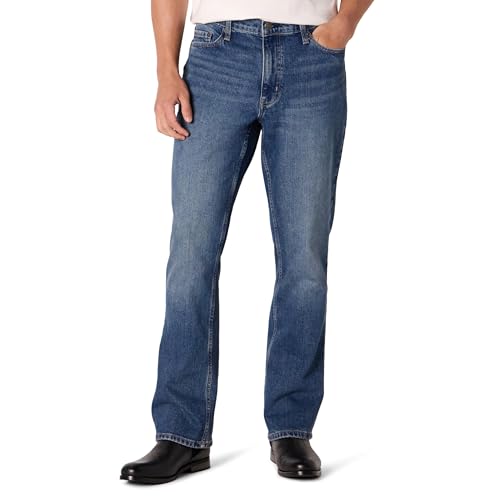
Amazon Essentials Men's Heavyweight Denim Straight-Fit Bootcut Jeans with 5 Pocket Styling, Zip Fly, Stretch, Stone Medium Wash, 36W x 32L
Check price on Amazon
Manledio Portable Work Boot Dryer, Foldable Shoe Dryer for Gloves Shoes | Foldable warmer design, Smart timer, quick heat drying, fits for leather sports shoes,travel-friendly for work boots
Check price on Amazon
ARIAT M2 Relaxed Boot Cut Jeans – Men’s Relaxed Fit Denim
Check price on Amazon
2PCS Universal CV Boot Kit, Trim-to-Fit Silicone Axle Boots,Black
Check price on Amazon
Levi's Men's 527 Slim Bootcut Fit Jeans, Wave Allusions-Stretch, 34W x 32L
Check price on Amazon
Fourluoo 6 Pairs Thermal Crew Socks Winter Thick Hiking Work Boot | Unisex Thick Thermal Woven Socks, Breathable Cozy Winter Boot Socks, Elastic Warm Work Hiking Socks One Size Fits Men Women
Check price on Amazon
UNITSTAGE 12 Tier Metal Shoe Rack with Wood Top, 40-48 Pairs | Tallest 78in for Maximum Storage, 3 iron Sheets for Heels, Removable Layer Fits Tall Boots, Display Top
Check price on Amazon
Levi's Men's 527 Slim Bootcut Fit Jeans | Comin Round The Mountain, 34W x 30L
Check price on AmazonFrequently Asked Questions
Final Tip: When shopping online, always check the return policy before buying. Even with perfect measurements, boot fit can vary between brands. A good return policy gives you peace of mind. For more help, explore our buying guides and first boot checklist.