
Alligator Boots: The Complete Guide to Exotic Leather Footwear
Everything you need to know about alligator boots — from leather grades and authenticity checks to fit, care, and styling. Make an informed purchase before you invest in genuine exotic leather.
START THE GUIDEWhy alligator boots stand apart: Alligator leather is prized for its unique scale pattern, durability, and ability to age beautifully. Unlike mass-produced leather, each pair of genuine alligator boots has a distinct grain that reflects the individual animal. This guide helps you understand what you're buying, how to spot quality, and how to protect your investment for decades.
What Are Alligator Boots?
Alligator boots are footwear made from the hide of the American alligator (Alligator mississippiensis), a material renowned in the luxury footwear world for its distinctive scale pattern, exceptional tensile strength, and supple feel. The hide is tanned and finished to preserve the natural tile-like scales, which give the boots their signature texture and visual depth.
Unlike cowhide or calfskin, alligator leather develops a rich patina over time, meaning your boots will look better with age if properly maintained. This is one reason enthusiasts consider them a lifelong investment rather than a seasonal purchase. If you're exploring other exotic options alongside alligator, our guide to exotic leather boots compares materials like ostrich leg, stingray skin, and elephant skin so you can weigh the trade-offs before deciding.
Most alligator boots on the market are Western or cowboy styles, though you'll also find dress boots, Chelsea silhouettes, and even sneaker-inspired designs. The material's natural rigidity means it takes longer to break in than softer leathers, but the payoff is a boot that molds to your foot and holds its shape for years. If you're building a collection of statement Western footwear, alligator pairs naturally with snakeskin Western boots and custom cowboy boots.
Understanding the distinction between alligator, crocodile, and caiman is essential before you buy. While all three are exotic reptilian leathers, they differ in scale structure, price, and durability. American alligator is generally considered the premium option, followed by crocodile, with caiman being the most affordable entry point into reptilian leather.
Recommended Alligator Boots & Exotic Leather Picks
⚠️ AFFILIATE DISCLOSURE: This website contains affiliate links. As an affiliate Associate, we earn from qualifying purchases. If you make a purchase through these links, we may receive a small commission at no additional cost to you. Read our full affiliate policy.

Texas Legacy Mens #110N Cognac Cowboy Boots Alligator Back Print Leather Square 10 D(M) US
Check price on Amazon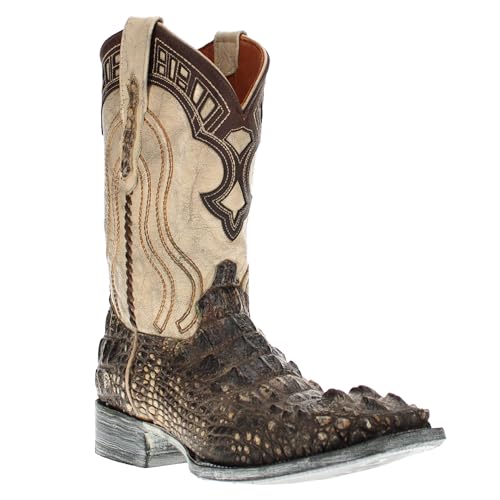
Vaccari Men's Alexander Genuine Natural Alligator Head Cut Broad Square Toe Western Cowboy Boots - 11 EE
Check price on Amazon
The Western Shops Mens Leather Square Toe Cowboy Boot Embossed Crocodile Alligator Print Western Boot (10, Black)
Check price on Amazon
Cody James Men's Men'S Pirarucu Exotic Boot Broad Square Toe Brown 13 D(M) US
Check price on Amazon
The Western Shops Mens Leather Square Toe Cowboy Boot Embossed Crocodile Alligator Print Western Boot (12,Café)
Check price on Amazon
WINBIRD Cowboy Boots for Men Square Toe Western Chelsea Boots | Slip on Ankle Boots Casual Mens Dress Shoes
Check price on Amazon
Texas Legacy Mens #110N Brown Cowboy Boots Alligator Back Print Leather Square 11 D(M) US
Check price on AmazonUnderstanding Alligator Leather Grades
Not all alligator leather is equal. The quality and price of a pair of alligator boots depend heavily on which part of the hide is used, how the scales are arranged, and the tanning process. Here are the three main categories you'll encounter:
Belly Cut (Premium)
The belly is the most prized section of an alligator hide. It features large, uniform, rectangular scales arranged in neat rows. This section is the most supple and takes dye evenly, producing the cleanest, most symmetrical pattern. Belly-cut boots are the most expensive and the most sought after by collectors.
$1,500 – $3,500+Hornback Cut (Mid-Range)
The hornback comes from the back of the alligator and features prominent raised ridges or "horns" along the center. This cut is thicker and more rigid than belly leather, offering a rugged, bold look. Hornback boots are favored in Western styles where a dramatic silhouette is desired.
$1,000 – $2,000Flank & Tail (Entry)
Flank and tail sections have smaller, less uniform scales and often include visible transitions in grain. While still genuine alligator, these cuts are more affordable and often used for accent panels rather than full boots. They're a practical entry point if you're testing the waters.
$800 – $1,500What Makes Alligator Boots Worth the Investment
Unmatched Durability
Alligator leather has one of the highest tensile strengths of any commercial leather. With proper care, a well-made pair can last 20+ years and be resoled multiple times.
Unique Grain Pattern
No two alligator hides are identical. The scale arrangement, size, and density vary by animal and cut, giving each pair a one-of-a-kind character.
Patina Development
Unlike synthetic materials, alligator leather darkens and softens with age, developing a rich patina that reflects how and where you've worn them.
Water Resistance
The dense scale structure provides natural water resistance. While not fully waterproof, alligator boots handle damp conditions far better than standard leather.
Status & Craftsmanship
Working with alligator requires specialized skills. Buying a pair supports artisans who hand-cut, stitch, and finish each boot with precision.
Resale Value
High-quality alligator boots retain value better than most footwear. Limited editions and well-known makers can appreciate over time.
How to Buy Alligator Boots: A Step-by-Step Guide
Buying alligator boots is a significant purchase, and the process differs from buying standard leather footwear. Here's what to check at each stage:
Verify Authenticity
Genuine American alligator leather comes with documentation. Reputable sellers provide CITES permits or certificates of origin. Check that the scale pattern is irregular and that the leather has a natural, not embossed, texture. If the price seems too low for "alligator," it's likely caiman or embossed cowhide.
Inspect the Scale Layout
On a quality pair, the largest, most uniform scales should be centered on the vamp (the top front of the foot). Scales should be symmetrical between the left and right boot. Misaligned or mismatched scales indicate lower-grade cutting.
Check the Construction
Look for Goodyear welt construction or hand-welted soles, which allow for resoling. Stitching should be tight and consistent. The lining should be leather, not synthetic, to allow proper moisture management. If you need help dialing in the fit, our fit and measurement guide covers how to measure properly before ordering.
Confirm the Fit
Alligator leather has limited stretch, so fit is critical. Your heel should be locked in with minimal slippage, and the widest part of your foot should align with the widest part of the boot. If you're between sizes, size up rather than down — a shoe stretcher can help with minor adjustments but won't fix a boot that's too small.
Evaluate the Sole and Heel
Leather soles are traditional and appropriate for dress and Western styles. Rubber soles offer better traction for everyday wear. Check that the heel is securely attached and that the sole edges are finished cleanly. If you're considering a non-slip option for practical wear, our non-slip boots guide covers what to look for.
Review the Return Policy
Exotic leather purchases often have stricter return policies than standard footwear. Confirm the return window, whether worn boots can be returned, and who covers shipping. Buying from a seller with a clear policy protects your investment.
Alligator Boots Price Guide
Prices vary widely based on leather grade, construction method, brand reputation, and whether the boots are made-to-measure. The table below reflects current market ranges:
| Category | Leather Type | Construction | Typical Price |
|---|---|---|---|
| Entry-Level Exotic | Caiman or flank alligator | Goodyear welt, machine-stitched | $800 – $1,200 |
| Mid-Range Alligator | Hornback or mixed cut | Goodyear welt, partial hand-finishing | $1,200 – $2,000 |
| Premium Belly Cut | Full belly alligator | Hand-welted, leather lined | $2,000 – $3,500 |
| Luxury / Made-to-Measure | Hand-selected belly, matched pair | Hand-welted, custom last | $3,500 – $6,000+ |
Keep in mind that prices for exotic leather fluctuate based on availability and tanning costs. Limited editions from established makers can exceed the ranges above. If you're comparing against other premium leathers, our dark brown leather boots and brown leather boots guides show how standard high-grade leathers compare in price and performance.
How to Care for Alligator Boots
Alligator leather requires more attention than cowhide, but the routine is straightforward once you establish it. Here's a practical care sequence:
Clean Gently After Each Wear
Wipe the surface with a soft, dry cloth to remove dust and surface dirt. Avoid saturating the leather with water. For deeper cleaning, use a cleaner formulated specifically for exotic leathers — a standard leather boot cleaner and conditioner may be too harsh for reptile scales.
Condition Sparingly
Alligator leather doesn't absorb conditioner the way cowhide does. Apply a thin layer of exotic-leather conditioner every 2–3 months, or after exposure to dry conditions. Over-conditioning can clog the scales and attract dirt.
Protect from Moisture
While alligator is naturally water-resistant, prolonged exposure to rain or snow can damage the finish. Use a water-repellent spray designed for exotic leathers and allow boots to dry naturally at room temperature — never use direct heat.
Store with Support
Use boot trees or a boot insert to maintain shape. Store in a cool, dry place away from direct sunlight. A boot tray or storage bag protects against dust and scratches. Avoid plastic bags, which trap moisture.
Address Scuffs Promptly
Minor scuffs can often be buffed out with a horsehair brush. For deeper scratches, consult a professional who specializes in exotic leather repair. Do not attempt to sand or aggressively polish alligator scales.
Resole Before Damage Occurs
Inspect soles regularly and have them replaced by a qualified cobbler before the welt is compromised. Because alligator uppers are durable, the sole is usually the first component to wear out.
How to Style Alligator Boots
Alligator boots are statement pieces, and how you style them depends on the boot's silhouette. Western alligator boots pair naturally with denim, chinos, and tailored Western wear. Dress-oriented alligator boots work with suits and formal trousers.
For Western styles, a classic approach is dark denim or boots with jeans in a straight or slight boot-cut fit. If you're wearing a suit, a sleek alligator Chelsea or dress boot can replace standard leather shoes — our Chelsea boots with suit guide covers the pairing rules. For a more casual look, alligator boots with chinos and a button-down shirt strike a balance between rugged and refined.
Color choice matters. Dark brown and black alligator boots are the most versatile. Brown pairs well with earth tones and denim, while black works with both formal and casual outfits. If you're exploring different leather tones, our dark brown ankle boots with low heel guide offers additional inspiration for building outfits around rich leather footwear.
Because alligator boots are eye-catching, let them be the focal point. Keep the rest of your outfit relatively understated — solid colors, clean lines, and minimal accessories. This is especially true for Western dress boots and formal styles.
Alligator vs. Other Exotic Leathers
If you're weighing alligator against other exotic options, here's a quick comparison to help you decide:
| Leather Type | Scale Pattern | Durability | Price Range | Best For |
|---|---|---|---|---|
| American Alligator | Large, irregular tiles | Excellent | $1,500 – $3,500+ | Collectors, formal wear |
| Caiman | Smaller, denser scales | Good | $800 – $1,500 | Everyday exotic |
| Ostrich Leg | Distinct quill nodes | Very good | $600 – $1,500 | Unique texture |
| Stingray | Beaded, pebbled | Exceptional | $700 – $1,800 | Heavy wear |
| Snakeskin | Scales, often small | Moderate | $500 – $1,200 | Fashion-forward looks |
Frequently Asked Questions About Alligator Boots
Yes, if you value durability, unique aesthetics, and long-term ownership. A well-made pair can last 20+ years with proper care and resoling. However, if you're hard on your footwear or prefer to rotate through many pairs, a high-quality cowhide boot may offer better value. Alligator is an investment in a specific look and material experience.
Genuine alligator has irregular, non-repeating scales that vary in size and shape across the boot. The leather should feel firm but flexible, and the scales should be slightly raised with natural edges. Embossed cowhide has a uniform, repeating pattern that feels flatter. Reputable sellers provide documentation, and the price should be consistent with genuine exotic leather — if it's under $600, it's almost certainly caiman or embossed leather.
Yes, American alligator is legally farmed and traded under CITES regulations. Legal alligator products are sold worldwide. The key is buying from a reputable seller who follows proper documentation. Caiman and crocodile have different regulations depending on species and country of origin, but all legal exotic leather sold in the U.S. and E.U. complies with wildlife trade laws.
Alligator leather has limited stretch compared to cowhide. It will mold slightly to your foot over time, but you shouldn't expect significant give. This is why getting the right size from the start is critical. If you're between sizes, size up rather than down. A shoe stretcher can help with minor width adjustments, but it won't fix a boot that's too short.
Break-in takes time — typically 2–6 weeks of regular wear. Start with short sessions of 1–2 hours and gradually increase. Wear thick socks initially to reduce friction. Use a boot tree between wears to help the leather relax and maintain shape. Avoid forcing the break-in with heat or water, which can damage the scales. If you're new to stiff leather boots, our break-in guide covers the process in detail.
Yes, if they're Goodyear welted or hand-welted. Most quality alligator boots use welted construction specifically to allow resoling. The alligator upper is the most durable part of the boot, so resoling extends the life significantly. Check with the maker or a qualified cobbler before purchasing if resoling is a priority for you.
Alligator and crocodile are different species with different scale structures. Alligator scales are generally broader, more irregular, and have a softer, more supple feel. Crocodile scales tend to be more uniform and slightly stiffer. American alligator is often considered the premium choice for boots because of its scale pattern and durability. Both are high-quality exotics, but alligator typically commands a higher price.
Store them in a cool, dry place away from direct sunlight. Use boot trees or a boot insert to maintain shape. A cotton dust bag or boot storage cover protects against dust and scratches. Avoid plastic bags, which trap moisture and can cause mildew. If you live in a humid climate, consider adding a silica gel packet to your storage area.
Ready to Invest in Alligator Boots?
Now that you understand the material, grades, fit, and care, you're equipped to make a confident purchase. Browse our recommended picks above or explore related exotic leather guides to compare your options.
VIEW RECOMMENDED ALLIGATOR BOOTSRelated Guides & Exotic Leather Comparisons
If you're exploring alligator boots, these related guides will help you compare alternatives and build a well-rounded collection:
- Exotic Leather Boots: Complete Guide — Compare alligator, caiman, ostrich, stingray, and more.
- Men's Exotic Cowboy Boots — How exotics perform in Western silhouettes.
- Stingray Cowboy Boots — The most durable exotic option.
- Ostrich Leg Boots — Unique quill texture at a lower price point.
- Snakeskin Western Boots — A lighter, more flexible exotic.
- Elephant Skin Boots — Heavy-duty exotic for rugged wear.
- Custom Cowboy Boots — Made-to-measure options including exotic leathers.
- Leather Boot Cleaner & Conditioner — Products for maintaining exotic leather.
- Boots Fit & Measurement Guide — Get the right size before you buy.