
Ostrich Leg Boots: The Complete Guide to Exotic Leather Footwear
Explore the distinctive beauty and unmatched durability of ostrich leg boots. Learn how to identify quality, understand the unique scale pattern, and choose the perfect pair for your collection.
VIEW TOP PICKSWhat Makes Ostrich Leg Boots So Special?
Ostrich leg boots represent a fascinating intersection of rugged western heritage and refined luxury. Unlike traditional smooth leathers, ostrich leg skin features a dramatic, heavily textured surface composed of distinct, tile-like scales that create a striking visual pattern. This unique grain is not just about aesthetics—it tells a story of exceptional durability and natural engineering.
The ostrich leg hide is significantly denser than the main body hide of the bird, making it one of the most resilient exotic leathers available. This density translates to boots that resist stretching, hold their shape beautifully over years of wear, and develop a rich patina that only improves with age. For collectors and enthusiasts, exotic leather boots like these are a prized addition to any wardrobe.
Whether you are drawn to the bold texture for western wear or seeking a distinctive statement piece for formal occasions, understanding the nuances of ostrich leg leather will help you make a confident, informed purchase.
Understanding Ostrich Leg Leather: Anatomy and Identification
Not all ostrich leather is created equal. The hide is broadly divided into two distinct sections, each with its own characteristics:
The Crown (Quill) Pattern
The most famous part of ostrich leather comes from the body, featuring the iconic "quill" or "bump" pattern where feathers once grew. This area is prized for its softness and flexibility, often used for the vamp (the front part) of boots. However, it is more prone to stretching over time.
The Leg Scale Pattern
Ostrich leg leather, the focus of this guide, comes from the bird's legs and feet. This hide is covered in large, distinct, rectangular or diamond-shaped scales that are tightly packed and incredibly tough. Key characteristics include:
- Density and Durability: The leg hide is significantly thicker and denser than the body hide, offering superior resistance to abrasion and wear. This makes it ideal for high-stress areas like the heel and toe.
- Unique Scale Pattern: The large, pronounced scales create a geometric, almost reptilian appearance that is instantly recognizable. No two hides are exactly alike, making each pair of boots truly unique.
- Shape Retention: Due to its density, ostrich leg leather resists stretching and sagging, helping your boots maintain their crisp silhouette for years.
- Minimal Pores: Unlike the body hide with its quill follicles, the leg hide has a much tighter, less porous surface, making it naturally more resistant to moisture and stains.
When examining ostrich leg boots, look for these distinct scales. High-quality boots will showcase the full, unblemished scales prominently on the vamp and heel counter. For those exploring different exotic options, comparing them to alligator boots or snakeskin western boots highlights the unique texture that ostrich leg brings to the table.
Why Choose Ostrich Leg Boots? Key Benefits
Investing in a pair of ostrich leg boots offers several compelling advantages over both standard leather and other exotic skins:
| Benefit | Description |
|---|---|
| Exceptional Durability | The dense fiber structure of the leg hide makes it highly resistant to scuffs, tears, and daily wear, often outlasting standard cowhide. |
| Distinctive Aesthetic | The bold, scaly texture creates a visually striking boot that stands out in both western and fashion-forward settings. |
| Shape Retention | Unlike softer leathers, ostrich leg resists stretching, ensuring your boots keep their shape and fit over time. |
| Natural Moisture Resistance | The tight scale structure provides a natural barrier against moisture, making them more resilient in damp conditions. |
| Investment Value | High-quality exotic boots often appreciate in value or at least hold their worth better than mass-produced footwear. |
For those who demand footwear that combines rugged capability with refined style, ostrich leg boots are a compelling choice. They pair exceptionally well with western dress boots aesthetics and can even complement modern casual looks.
How to Choose the Perfect Ostrich Leg Boots
Selecting the right pair requires attention to several key factors. Here is a comprehensive buying guide to help you navigate the market:
1. Assess the Scale Quality and Pattern
Look for boots where the scales are large, uniform, and undamaged. The most prized cuts feature the "belly" or "neck" scales, which are larger and more pronounced. Avoid boots with deep cracks, excessive scarring, or scales that appear to be peeling. A well-matched pair will have consistent scale patterns across both boots.
2. Examine the Construction
Exotic leather deserves expert craftsmanship. Check for:
- Goodyear Welt: This construction method allows for resoling, significantly extending the life of your boots.
- Leather Lining: A full leather lining breathes better and molds to your foot, enhancing comfort and longevity.
- Reinforced Shanks: A steel or wood shank provides arch support and stability.
- Quality Stitching: Look for tight, even stitching with no loose threads. Double-stitched welts are a sign of durability.
If you require extra room, consider looking for comfortable work boots for wide feet as a baseline for fit, though exotic boots often have their own unique fit characteristics.
3. Determine Your Style and Purpose
Ostrich leg boots come in various styles:
- Western/Cowboy: Traditional silhouettes with a riding heel and pointed or snip toe. Perfect for pairing with jeans and western wear. You might also explore men's exotic cowboy boots for more inspiration.
- Roper: A lower heel and rounder toe, offering more comfort for walking and all-day wear.
- Dress: Sleeker profiles suitable for dressier occasions, though less common in ostrich leg due to its bold texture.
- Work: Some manufacturers offer ostrich leg work boots for those who want durability with a unique look, similar to custom work boots.
Consider your primary use. For everyday wear, a roper or traditional western boot is versatile. For special occasions, a more refined dress boot may be appropriate. If you love the western aesthetic, you might also appreciate snip toe boots for a classic look.
4. Fit and Sizing
Exotic leathers, including ostrich leg, generally have less stretch than calfskin. It is crucial to get the right fit from the start. Here are tips:
- Measure Your Feet: Do this at the end of the day when your feet are largest. Use a Brannock device for accuracy.
- Consider Your Socks: Wear the socks you plan to wear with the boots when trying them on.
- Allow for Break-In: While ostrich leg is tough, it will still mold to your foot over time. However, it won't stretch significantly in length, so ensure the length is correct.
- Use a Shoe Stretcher: If you need minor width adjustments, a shoe stretcher can help, but proceed with caution on exotic leather.
For those who prioritize comfort, exploring comfortable waterproof walking boots can provide a baseline for what a supportive fit feels like.
Caring for Your Ostrich Leg Boots
Proper care is essential to maintain the beauty and longevity of your exotic leather investment. Ostrich leg leather is durable but requires specific attention:
Cleaning
Wipe your boots with a soft, damp cloth after each wear to remove dust and dirt. For deeper cleaning, use a cleaner specifically formulated for exotic leathers. Avoid harsh chemicals or excessive water, which can damage the scales. A quality leather boot cleaner and conditioner is a worthwhile investment.
Conditioning
Ostrich leg leather benefits from regular conditioning to prevent drying and cracking. Use a conditioner designed for exotic skins, applying it sparingly with a soft cloth. Allow it to absorb before buffing with a horsehair brush. Do not over-condition, as this can clog the scales.
Protection
Apply a waterproofing spray designed for exotic leathers to protect against moisture and stains. Test on a small, inconspicuous area first. Store your boots in a cool, dry place away from direct sunlight. Use boot trees or stuff them with newspaper to maintain their shape. Consider a boot tray for organized storage and to protect them from floor moisture.
Repair
Address any issues promptly. Loose stitching or a worn heel should be repaired by a qualified cobbler experienced with exotic leathers. Regular maintenance will ensure your boots remain a cherished part of your wardrobe for decades.
Styling Ostrich Leg Boots: From Ranch to Runway
Ostrich leg boots are a statement piece. Their unique texture can elevate a wide range of outfits:
Western & Casual
Pair traditional western ostrich leg boots with dark denim jeans, a crisp white shirt, and a leather belt. The scales add a touch of rugged luxury to a classic cowboy look. For a more modern take, try them with slim-fit jeans and a leather jacket. Those who enjoy this aesthetic may also like denim cowboy boots for a different texture.
Smart Casual & Dressy
For a sophisticated edge, wear a sleek ostrich leg boot with tailored chinos and a blazer. The texture adds depth to a monochromatic outfit. You can also draw inspiration from Chelsea boot outfits for ideas on how to style a pull-on boot with more polished attire. A Chelsea boot with suit combination demonstrates how boots can work in formal settings.
Women's Styling
Women's ostrich leg boots can be styled with dresses, skirts, and jeans. A short dress with boots is a timeless combination, and the unique texture of ostrich leg adds a touch of luxury. Explore short dress with boots ideas for inspiration. For a more dramatic look, consider how over-the-knee leather boots make a statement, and apply similar principles of balance and proportion.
Ostrich Leg Boots Market: What to Expect
Ostrich leg boots are a premium product, and pricing reflects the rarity of the material and the craftsmanship involved. Here is a general overview of what you can expect to pay:
- Entry-Level: $400–$700. These may feature ostrich leg on the vamp with leather shafts, or be from lesser-known brands. Quality can vary, so inspect carefully.
- Mid-Range: $800–$1,500. This range typically includes well-made boots from reputable western brands, with full ostrich leg vamps and high-quality construction.
- High-End: $1,500–$3,000+. Custom-made boots from master bootmakers, using premium cuts of ostrich leg and offering a perfect fit. These are heirloom-quality pieces.
When shopping, consider the value proposition. A well-made pair of ostrich leg boots can last for decades with proper care, making the cost-per-wear remarkably low. Always buy from reputable dealers to ensure authenticity and quality. For those interested in other exotic options, stingray cowboy boots and elephant skin boots offer different textures and characteristics at varying price points.
Recommended Ostrich Leg Boots
⚠️ AFFILIATE DISCLOSURE: This website contains affiliate links. As an affiliate Associate, we earn from qualifying purchases. If you make a purchase through these links, we may receive a small commission at no additional cost to you. Read our full affiliate policy.

Cuadra Men's Ostrich Leg Leather Cowboy Boots Brown Side Zip | 1J2KPT
Check price on Amazon
Vaccari Men's Dalton Genuine Cognac Ostrich Leg Leather Narrow Square Toe Western Cowboy Boots - 9.5 D
Check price on Amazon
Dan Post Men's Anders Ostrich Leg Boots
Check price on Amazon
Cody James Men's Men'S Exotic Ostrich Leg Western Boot Round Toe - BBME-202 10.5 D(M) US
Check price on Amazon
El Dorado Men's Men'S Ostrich Leg Brass Western Boot Round Toe - ED2204 10.5 D(M) US
Check price on Amazon
Cody James Men's Men's Exotic Ostrich Leg Western Boot Round Toe - BBME-203 9 D(M) US Brown
Check price on Amazon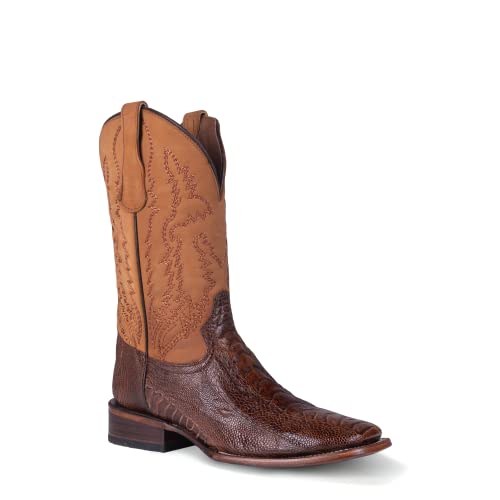
Circle G MEN'S BRASS/YELLOW OSTRICH LEG EMBROIDERY WIDE SQ. TOE
Check price on Amazon
Texas Legacy Mens Cognac Western Leather Cowboy Boots Ostrich Leg Print J Toe 10.5 D(M) US
Check price on AmazonFrequently Asked Questions About Ostrich Leg Boots
Are ostrich leg boots durable?
Yes, ostrich leg boots are exceptionally durable. The leg hide is denser and tougher than the body hide, making it highly resistant to abrasion, scuffs, and stretching. With proper care, they can last for many years, often outlasting standard leather boots.
How do I clean ostrich leg boots?
Clean your ostrich leg boots with a soft, damp cloth to remove surface dirt. For deeper cleaning, use a cleaner specifically designed for exotic leathers. Avoid soaking the leather or using harsh chemicals. Follow with a conditioner made for exotic skins to keep the leather supple.
Do ostrich leg boots stretch?
Ostrich leg leather has limited stretch compared to softer leathers. It is important to get the correct fit from the beginning. While the boots will mold slightly to your feet, they will not stretch significantly in length or width.
Are ostrich leg boots waterproof?
Ostrich leg leather is naturally more moisture-resistant than many other leathers due to its dense scale structure. However, they are not fully waterproof unless treated with a waterproofing spray. For wet conditions, consider dedicated comfortable waterproof walking boots.
What is the difference between ostrich leg and ostrich body leather?
Ostrich body leather features the iconic quill (bump) pattern and is softer and more flexible. Ostrich leg leather has a distinct, large scale pattern, is much denser, and is more durable and resistant to stretching. Both are prized for different reasons.
How much do ostrich leg boots cost?
Prices vary based on brand, craftsmanship, and the amount of ostrich leg leather used. Entry-level pairs start around $400–$700, mid-range boots cost $800–$1,500, and high-end custom boots can exceed $1,500, sometimes reaching $3,000 or more.