
Custom Work Boots: The Complete Buying Guide
Discover how made-to-measure work boots deliver unmatched comfort, safety, and durability. Learn what to look for before you invest in a pair built specifically for your feet and your job.
Explore Recommended PicksWhy custom work boots matter: Off-the-shelf boots work for many people, but if you spend 8–12 hours a day on your feet, a personalized fit can prevent blisters, reduce fatigue, and even improve your posture. This guide walks you through every decision — from measuring your feet to selecting the right safety toe and sole — so you can order with confidence.
What Exactly Are Custom Work Boots?
Custom work boots — also called bespoke or made-to-measure work boots — are footwear built to the exact dimensions of your feet rather than a standard last. Unlike regular comfortable work boots for wide feet, which simply offer more room in the toe box, custom boots adjust length, width, arch height, instep, and heel cup independently. This level of precision is especially valuable for people with uneven foot sizes, high arches, or medical conditions like plantar fasciitis.
The process typically involves either a 3D scan or a physical foot tracing, followed by a consultation about your work environment. A bootmaker then selects the last, leather, lining, and sole system that matches your needs. The result is a boot that feels broken-in from the first wear and lasts significantly longer than mass-produced alternatives.
If you are still exploring broader options, our boot purchase guides cover the fundamentals of fit, materials, and value before you commit to a custom order.
Who Should Consider Going Custom?
Workers on Their Feet All Day
Construction, logging, welding, and warehouse roles demand boots that support every step. Custom fit reduces micro-movements inside the boot that cause hot spots and long-term foot damage.
People with Hard-to-Fit Feet
If you have wide forefeet, narrow heels, high insteps, or one foot larger than the other, standard sizes rarely work. Custom boots solve these mismatches directly.
Those with Medical Needs
Diabetes, arthritis, and plantar fasciitis often require pressure redistribution. An orthopedic boot for a sprained ankle or a fully custom build can accommodate orthotics and reduce pain.
Professionals Who Need Specific Safety Ratings
Electric hazard, metatarsal guards, puncture resistance, and specific slip ratings can all be incorporated into a custom build without compromising fit.
Key Factors When Ordering Custom Work Boots
1. Accurate Foot Measurement
Every custom order starts with precise measurements. You will either visit a fitter or use a home measurement kit that captures length, width, arch length, and heel width. Some makers now offer 3D scanning apps that produce a digital last. Always measure at the end of the day when your feet are at their largest, and wear the same socks you plan to use on the job.
2. Leather and Lining Selection
Full-grain leather remains the gold standard for durability and breathability. For wet environments, consider oil-tanned or waterproof-treated leather. Lining choices range from soft calfskin to moisture-wicking mesh. If you need added warmth, look at insulated options similar to those found in men's fur boots, but ensure the insulation does not compromise breathability in warmer months.
3. Safety Toe and Protective Features
Steel toe, composite toe, and alloy toe each have trade-offs. Steel is the most protective but heaviest; composite is lighter and non-metallic, making it ideal for electrical work. Alloy sits in between. You can also add metatarsal guards, puncture-resistant plates, and electrical hazard protection. Discuss your specific job hazards with your bootmaker — they will guide you toward the right combination.
4. Sole and Heel Configuration
The outsole determines traction, shock absorption, and slip resistance. Lug soles excel on uneven terrain, while flat wedge soles work well on concrete. For jobs that require constant kneeling, a defined heel may be necessary. Custom makers can also adjust heel height to address leg-length discrepancies. If you are comparing sole types across different boot styles, our guide to wedge sole boots explains how a wedge sole changes the feel and stability of a work boot.
5. Break-In and Maintenance
Even custom boots benefit from a short break-in period, though it is usually much shorter than with off-the-shelf pairs. Use a quality leather boot cleaner and conditioner every few weeks to keep the leather supple and water-resistant. Store boots with a boot tray or in a dry, ventilated area to prevent mildew.
What Do Custom Work Boots Cost?
Typical price range: Custom work boots generally cost between $400 and $1,200 depending on leather choice, safety features, and the maker's reputation. Entry-level custom builds from domestic workshops start around $400, while fully bespoke boots with exotic leathers and multiple protective layers can exceed $1,200. Expect to pay a deposit at the time of order and wait 4–12 weeks for delivery.
Compared to replacing a $200 pair every year, a well-maintained custom pair can last 5–10 years, making the cost per wear significantly lower. If you are not ready for full custom, consider a shoe stretcher or boot insert to improve the fit of an existing pair.
How to Choose a Custom Boot Maker
Not all custom bootmakers specialize in work footwear. Look for a maker who regularly builds safety-rated boots and can provide documentation for ASTM or EN ISO ratings. Ask about their return policy, warranty, and whether they offer resoling services. A good maker will also discuss your work environment in detail before recommending a build.
If you are interested in the western aesthetic but need work-ready durability, explore western style work boots — many makers in that tradition now offer safety toes and oil-resistant soles. For those who want a fully personalized western look, custom cowboy boots can also be built with work-specific features.
If your work involves hunting or heavy outdoor use, our guide to waterproof hunting boots covers the overlap between field boots and work boots, which may help you decide which features matter most.
Common Mistakes to Avoid
- Measuring your feet yourself without guidance. A small error in arch length can make the boot uncomfortable. Always follow the maker's measurement instructions precisely or visit a fitter.
- Choosing leather based on looks alone. A beautiful leather may not resist water, oil, or chemicals. Prioritize function over fashion for work boots.
- Skipping the safety rating discussion. If your job requires a specific rating and your custom boot does not have it, you may not be allowed to wear it on site.
- Neglecting maintenance. Custom boots are an investment. Without regular cleaning and conditioning, even the best leather will crack and dry out.
- Ordering during peak season. Lead times can stretch during busy periods. Order well before you need the boots.
Frequently Asked Questions
How long does it take to get custom work boots?
Most makers require 4–12 weeks from order to delivery. Complex builds with exotic leathers or multiple safety features may take longer. Always confirm the lead time before placing a deposit.
Can I use my own orthotics in custom work boots?
Yes. Inform your bootmaker that you wear orthotics so they can adjust the footbed and arch support accordingly. Some makers will even build the boot around a scan of your orthotic.
Are custom work boots worth the price?
For people who work on their feet daily, the reduced fatigue, improved safety, and longer lifespan often justify the cost. If you only wear work boots occasionally, a high-quality off-the-shelf pair may be more practical.
Can custom work boots be resoled?
Most reputable makers offer resoling services. A good leather upper can last through multiple sole replacements, which extends the life of the boot significantly.
What if the boots don't fit when they arrive?
Reputable makers include a fit guarantee or adjustment period. Ask about their policy before ordering. Minor adjustments can often be made locally, but major fit issues should be addressed by the maker.
Ready to Find Your Perfect Pair?
Browse our curated selection of top-rated work boots and compare features, prices, and reviews — all in one place.
See Recommended BootsRecommended Custom Work Boots
⚠️ AFFILIATE DISCLOSURE: This website contains affiliate links. As an affiliate Associate, we earn from qualifying purchases. If you make a purchase through these links, we may receive a small commission at no additional cost to you. Read our full affiliate policy.

Georgia Boot Georgia Unisex-Adult G4432 Wellington-M Mns11 F&R Cc Ss, Multi, 095
Check price on Amazon
Custom Leathercraft Men's Black-Soft Toe, 10
Check price on Amazon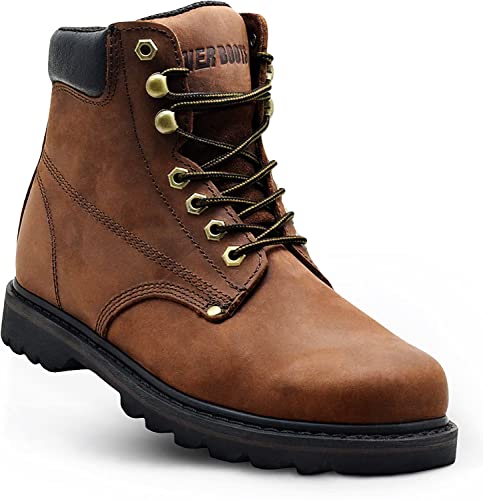
EVER BOOTS Tank Men's Soft Toe Oil Full Grain Leather Work Boots Construction Rubber Sole (10.5 D(M), Darkbrown)
Check price on Amazon
ARIAT Men’s Sierra Wide Square Toe Steel Toe Work Boot
Check price on Amazon
NORTIV 8 Men's Military Tactical Work Boots Hiking Side Zip,Sand,10.5 | Leather Motorcycle Combat Boots for Outdoor Camping Yard Work Tactical Jobs and Daily Wear Response
Check price on Amazon
NORTIV 8 Men's Waterproof Steel Toe Work Boots,Brown,10.5 | Slip Resistant ASTM-certified Safety Toe Boots for Men for Construction,Warehouse,Industrial and Daily Work,Paladin-Steel
Check price on Amazon
NINGO Steel Toe Boots Work for Men, Non Slip Safety Moc Toe Boot with Water Resistant Full Grain Leather, EH Rated, Oil Resistant, Comfortable Work Shoes for Construction, Industrial, Brown 12
Check price on Amazon