
Kids Hiking Shoes: The Complete Parent's Buying Guide
Everything you need to know before buying hiking shoes for your child. From fit and support to waterproofing and durability — make the right choice for their next outdoor adventure.
See Recommended PicksBootsPedia Guide: Children's feet are still developing, and the wrong footwear can lead to discomfort, blisters, or even long-term foot issues. This guide walks you through every factor that matters — so you can buy with confidence and keep your little explorer comfortable on every trail.
Why Kids Need Proper Hiking Shoes (Not Just Sneakers)
It's tempting to let kids hike in their everyday sneakers — they're cheaper, already broken in, and readily available. But regular sneakers lack the ankle support, traction, and protection that uneven terrain demands. On rocky paths, muddy trails, or steep inclines, inadequate footwear increases the risk of slips, twisted ankles, and blisters that can quickly end a family outing.
Kids hiking shoes are engineered with deeper lugs for grip, reinforced toe caps for protection against roots and rocks, and often feature waterproof membranes to keep feet dry. These features matter even more for children because their gait is less stable and their feet are more prone to fatigue. A proper pair can mean the difference between a whiny "I'm tired" after 20 minutes and a happy, energized hike that lasts all afternoon.
Beyond safety, investing in quality hiking shoes for kids also makes financial sense. A well-made pair can often be passed down to younger siblings or resold if kept in good condition. For parents looking for other durable options for little ones, children's Chelsea boots offer a stylish everyday alternative, while infant soft-sole shoes are ideal for the youngest walkers just finding their feet.
Key Features to Look For in Kids Hiking Shoes
Proper Fit & Growing Room
Kids' feet grow fast. Look for shoes with a thumb's width of space at the toe and adjustable closures (laces, Velcro, or elastic) to accommodate growth. Never buy shoes that are too tight — they'll cause blisters and foot pain.
Ankle Support & Stability
Mid-cut or high-top designs provide better ankle support for uneven terrain. This is especially important for younger children who are still developing balance and coordination on trails.
Waterproofing & Breathability
Waterproof membranes keep feet dry in puddles and morning dew, while breathable materials prevent overheating. Look for shoes with both features for year-round comfort.
Durable Construction
Kids are hard on their gear. Reinforced toe caps, abrasion-resistant uppers, and quality stitching ensure the shoes last through multiple seasons and rough play.
Grippy Outsole
A rubber outsole with deep, multi-directional lugs provides traction on rocks, mud, and wet surfaces. This is the single most important safety feature for trail hiking.
Lightweight Design
Heavy shoes tire kids out quickly. Modern materials like synthetic mesh and EVA foam midsoles keep hiking shoes lightweight without sacrificing protection.
Cushioning & Arch Support
A cushioned midsole absorbs impact on hard-packed trails. Removable insoles are a plus — they allow you to add orthotic support if your child needs it. For additional support options, see our orthopedic footwear guide.
Easy On & Off
Kids want independence. Quick-lace systems, Velcro straps, and wide openings make it easier for children to put on and take off their own shoes — a lifesaver on camping trips.
Types of Kids Hiking Shoes: Which One Is Right for Your Child?
Not all hiking shoes are created equal, and the right choice depends on your child's age, the terrain you'll be exploring, and how often you hit the trails. Here's a breakdown of the main categories:
| Type | Best For | Key Features | Typical Price |
|---|---|---|---|
| Trail Runners | Older kids, fast-paced hikes, well-maintained trails | Lightweight, breathable, low-cut, aggressive tread | $45–$85 |
| Low-Cut Hiking Shoes | Day hikes, moderate terrain, kids who dislike high tops | Waterproof options, toe caps, moderate ankle support | $55–$95 |
| Mid-Cut Hiking Boots | Rugged trails, younger children, ankle support needed | Higher ankle coverage, waterproof, durable leather/synthetic | $65–$120 |
| Winter Hiking Boots | Cold weather, snow, insulated trails | Insulated, waterproof, deep lugs, warm lining | $70–$130 |
| Sandals & Water Shoes | Summer hikes, creek crossings, wet terrain | Quick-drying, drainage ports, toe protection | $30–$60 |
For most families, a mid-cut hiking boot is the best all-around choice for children under 10, while trail runners or low-cut shoes work well for older kids and teens. If you hike in wet conditions, prioritize waterproof models. For winter adventures, check out our guide to cold weather waterproof boots and winter snow boots on sale for additional options.
How to Get the Right Fit for Kids Hiking Shoes
Proper fit is the single most important factor in choosing kids hiking shoes. A shoe that's too small causes blisters and foot pain; one that's too large leads to tripping and instability. Here's how to get it right:
- Measure feet at the end of the day. Feet swell slightly during activity, so measuring in the afternoon gives a more accurate size.
- Leave a thumb's width at the toe. There should be about 1–1.5 cm (a thumb's width) between the longest toe and the front of the shoe.
- Check the width. Kids' feet vary in width. Ensure the shoe doesn't pinch the sides or allow the foot to slide side-to-side.
- Test with hiking socks. Bring the socks your child will wear on the trail when trying on shoes. Thick socks can change the fit significantly.
- Have them walk on an incline. If possible, have your child walk up and down a ramp or slope in the store. Their toes shouldn't jam into the front on descents.
- Check heel lock. The heel should stay securely in place without slipping when walking. A slipping heel causes blisters.
- Re-measure every few months. Children's feet can grow half a size or more in just a few months. Check fit regularly, especially before hiking season.
If you're unsure about sizing, consult our detailed boot fit and measurement guide for step-by-step instructions. For children with specific foot health concerns, orthopedic footwear may be worth discussing with a pediatric podiatrist.
Materials That Matter: Leather vs. Synthetic vs. Mesh
The materials used in kids hiking shoes affect durability, breathability, water resistance, and weight. Here's a quick comparison:
Leather Uppers
- Excellent durability and abrasion resistance
- Naturally water-resistant (especially full-grain)
- Molds to the foot over time
- Easy to clean and maintain
- Heavier than synthetic options
- Requires break-in period
Synthetic & Mesh Uppers
- Lightweight and breathable
- No break-in period needed
- Quick-drying
- Less durable than leather
- May not provide as much structure
- Can be less water-resistant
For young children and rugged terrain, leather or leather-synthetic hybrids offer the best balance of durability and support. For older kids who hike fast and light, synthetic mesh shoes are often preferred for their breathability and low weight. If you're looking for full-grain leather options, see our guide to full-grain leather boots. And for keeping any leather footwear in top shape, our oiling boots guide explains how to condition and protect leather from the elements.
Our Top Picks for Kids Hiking Shoes
After researching dozens of models and considering factors like durability, fit, support, and value, here are our top recommendations for kids hiking shoes across different categories:
Best Overall: Merrell Kid's Moab 3
The Moab series has been a favorite among hikers for years, and the kids' version delivers the same reliability. It offers excellent ankle support, a grippy Vibram outsole, and a waterproof membrane. The Velcro closure makes it easy for kids to put on themselves. Price: $65–$80
Best Budget: Columbia Kids' Redmond
A fantastic entry-level option that doesn't skimp on features. The Redmond offers good traction, a comfortable fit, and is available at a wallet-friendly price. It's ideal for families new to hiking or for kids who are still growing fast. Price: $45–$60
Best for Young Kids: Keen Kids' Newport H2
This hybrid sandal-shoe is perfect for younger children (ages 4–8). It offers toe protection, quick-drying materials, and a secure fit. It's ideal for creek crossings and warm-weather hikes. Price: $50–$65
Best Winter Option: Kamik Kids' Snow Gypsy
When temperatures drop, this insulated, waterproof boot keeps feet warm and dry. It features a removable liner, deep lugs for snow traction, and a comfortable fit for all-day wear. Price: $60–$85
Best for Older Kids: Salomon Kids' Outline
Lightweight, breathable, and stylish, the Outline is designed for fast-paced hikes. It features a quicklace system, a cushioned midsole, and a Contagrip outsole for reliable traction on varied terrain. Price: $70–$90
Best Value: Northside Kids' Rampart
This budget-friendly hiking shoe punches above its weight. It offers a waterproof construction, a padded collar for comfort, and a rugged outsole — all at a price that won't break the bank. Price: $35–$50
Caring for Kids Hiking Shoes: Make Them Last
Kids' hiking shoes take a beating. With proper care, you can extend their lifespan and keep them comfortable for multiple seasons. Here are our top maintenance tips:
- Clean after every hike. Remove mud, dirt, and debris with a soft brush or cloth. For tough mud, let it dry first, then brush it off. A dedicated boot scrubber makes this job much easier.
- Air dry — never use direct heat. Stuff shoes with newspaper to absorb moisture and let them air dry at room temperature. Never put them in a dryer or near a radiator, as heat can warp materials and damage waterproof membranes.
- Re-waterproof regularly. Even waterproof shoes lose their effectiveness over time. Apply a waterproofing spray or wax specifically designed for the shoe's material. Our waterproofing guide covers this in detail.
- Check for wear and tear. Inspect soles, stitching, and closures regularly. Address small issues before they become big problems. For leather shoes, oiling boots periodically keeps the leather supple and water-resistant.
- Store properly. Keep shoes in a cool, dry place. Avoid leaving them in a hot car or damp garage. If storing for a season, clean and waterproof them first.
- Use the right socks. Moisture-wicking hiking socks reduce blisters and keep feet comfortable. Avoid cotton socks, which retain moisture and cause chafing.
Recommended Kids Hiking Shoes
⚠️ AFFILIATE DISCLOSURE: This website contains affiliate links. As an affiliate Associate, we earn from qualifying purchases. If you make a purchase through these links, we may receive a small commission at no additional cost to you. Read our full affiliate policy.
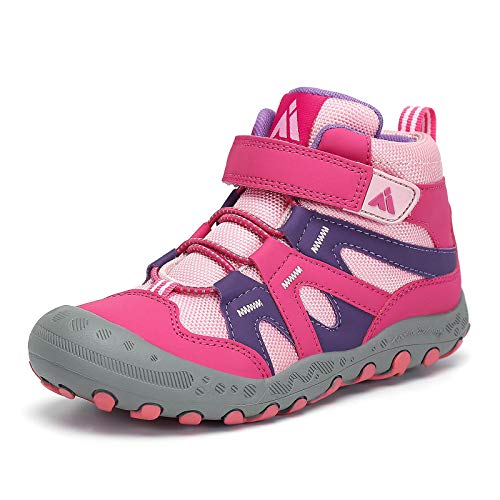
Mishansha Unisex Boys Girls Water-Resistant Hiking Boots, 13 Little Kid | Non-Slip Trekking Shoes, Protective Toe, Adjustable Fit for Hiking, Camping, Walking, School, and Outdoor Adventures
Check price on Amazon
Amazon Essentials Unisex Kids' Laced up Hiking Boots for Boys and Girls, Olive Multi, 4 Big Kid
Check price on Amazon
Merrell unisex child Trail Chaser Hiking Sneaker, Gunsmoke/Orange, 4 Big Kid US
Check price on Amazon
KEEN Unisex-Child Targhee 4 Mid Height Durable Comfortable Waterproof Hiking Boots, Bison/Brindle, 4
Check price on Amazon
Merrell Boy's Trail Chaser JR Shoe, gunsmoke, 5 Medium US Toddler
Check price on Amazon
Western Chief Kids Freestyle Neoprene Snow Boot, Black, 11 | Toddler to big kid sizes boots for boys and girls with fleece lining, EVA insole and traction for rain, snow and outdoor play
Check price on Amazon
Columbia Youth Dart Canyon Low, Black/Mountain Red, 4 Regular
Check price on AmazonFrequently Asked Questions About Kids Hiking Shoes
Look for proper ankle support, durable materials, waterproofing, and a grippy outsole. Ensure the shoes fit well with room for growth, and choose lightweight designs appropriate for your child's age and hiking terrain. Adjustable closures like laces or Velcro make it easier for kids to get a secure fit.
Yes. Quality kids hiking shoes provide better protection, support, and durability than regular sneakers. They reduce injury risk on uneven terrain and can often be passed down or resold if in good condition. Considering that a single twisted ankle can ruin a family hike, the safety benefits alone justify the cost.
Children's feet grow quickly, so hiking shoes may need replacement every 6–12 months. Also check for worn treads, damaged uppers, or loss of waterproofing. If the shoe no longer fits properly or shows significant wear, it's time to replace. For growing kids, it's often better to buy quality shoes that can be handed down than to buy cheap shoes that wear out quickly.
For very short, flat, well-maintained paths, sneakers can work in a pinch. But for anything more challenging — rocky terrain, steep inclines, muddy conditions, or longer distances — proper hiking shoes are strongly recommended. Sneakers lack the traction, ankle support, and protection needed for real trails.
Waterproofing is a major plus, especially if you hike in damp climates, near creeks, or in shoulder seasons. However, waterproof shoes are typically less breathable and heavier. In hot, dry conditions, a breathable, quick-drying shoe may be more comfortable. Many families keep both options for different seasons.
There should be about a thumb's width of space between the longest toe and the front of the shoe. The heel should stay locked in place without slipping. Your child should be able to wiggle their toes freely. When walking, the shoe should feel snug but not tight. Always have your child try on shoes with the socks they'll wear hiking. For a complete guide, see our fit and measurement page.
Ready to Hit the Trail?
Now that you know exactly what to look for, it's time to find the perfect pair for your little adventurer. Browse our recommended picks above or explore more outdoor footwear guides.
Shop Recommended PicksFinal Thoughts: Invest in Their Adventure
Choosing the right kids hiking shoes is an investment in your child's comfort, safety, and love for the outdoors. A well-fitted, supportive pair can turn a miserable hike into a lifelong passion for exploration. Don't rush the decision — take the time to measure properly, consider the terrain you'll be hiking, and choose quality over short-term savings.
Whether you're hitting a local nature trail or planning a family mountain adventure, the right footwear makes all the difference. And while you're gearing up, don't forget to check out our guides for other outdoor essentials like men's hiking boots, lightweight boots, and winter walking shoes. Happy hiking!