
Women's Waterproof Hiking Shoes Reviews
Independent, research-based reviews of the best women's waterproof hiking shoes. Compare traction, comfort, breathability, and durability before you buy.
SEE TOP PICKSTop Rated Women's Waterproof Hiking Shoes
⚠️ AFFILIATE DISCLOSURE: This website contains affiliate links. As an affiliate Associate, we earn from qualifying purchases. If you make a purchase through these links, we may receive a small commission at no additional cost to you. Read our full affiliate policy.

NORTIV 8 Women's Waterproof Hiking Boots Trekking,Grey/Blue,7.5 | Lightweight Hiking Walking Trail Work Rain Camping Outdoor Slip Resistant Daily Boots Seeker
Check price on Amazon
Merrell Women's Moab 3 Wp Hiking Shoe, New Altitude, 8 | Why We Like The Merrell Moab 3 Waterproof Hiking Shoe
Check price on Amazon
Amazon Essentials Women's Waterproof Hiking Shoe, Black, 9
Check price on Amazon
Columbia Womens Crestwood Waterproof, Graphite/Wild Iris, 6.5 | Why We Like The Columbia Crestwood Waterproof Hiking Shoe
Check price on Amazon
CUSHIONAIRE Brig Womens Hiking Shoes, Supportive Trail Shoes for Women with Waterproof Protection and Arch Support
Check price on Amazon
NORTIV 8 Women's Waterproof Hiking Boots,Light Grey/Pink,8 | Lightweight Mid-Cut Hiking Work Winter Rain Hunting Duck Boot Trail Camping Trekking Walking Comfortable Outdoor Boot
Check price on Amazon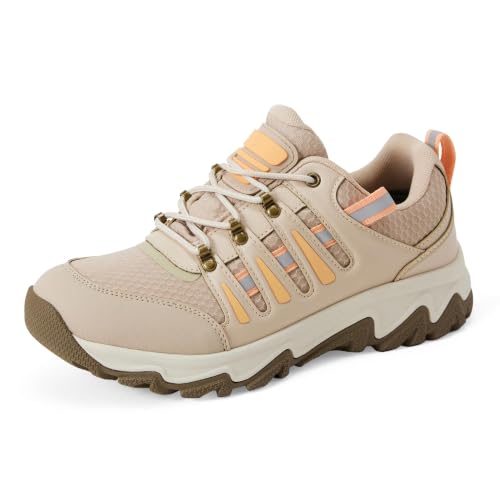
Amazon Essentials Women's Waterproof Hiking Shoe, Sand, 7
Check price on AmazonWhat Makes a Great Women's Waterproof Hiking Shoe?
Not every shoe labeled "waterproof" performs the same on the trail. A genuinely capable women's waterproof hiking shoe balances four critical elements: a reliable membrane, aggressive traction, anatomical support, and breathability that prevents overheating. If any one of these is weak, the shoe will disappoint on long or technical hikes.
The waterproof membrane is the core. Most quality models use either Gore-Tex or a proprietary in-house membrane. These block external moisture while allowing internal vapor to escape — but only if the shoe's upper and lining are designed to work with the membrane. A common mistake is choosing an ultra-stiff shoe for casual day hikes; that rigidity reduces breathability and comfort. For mixed-use trails, consider a lightweight waterproof hiking boot or a hiking shoe that doesn't look like a hiking shoe if you want versatility beyond the trail.
💧 Waterproof Membrane
Gore-Tex or equivalent membrane keeps feet dry through puddles, rain, and wet grass. Check for taped seams and a gusseted tongue.
🥾 Outsole Traction
Look for multi-directional lugs (4–5mm) from Vibram, Contagrip, or similar. Deeper lugs grip mud and loose gravel better.
🦶 Arch & Ankle Support
A structured midsole and padded collar reduce fatigue. Shoes with good ankle support are ideal for uneven terrain.
🌬️ Breathability
Even waterproof shoes need ventilation. Mesh panels and moisture-wicking linings prevent sweat buildup on warmer hikes.
Women's Waterproof Hiking Shoes Comparison
The table below summarizes key characteristics across popular categories. Use it to narrow your shortlist based on your primary hiking environment and foot profile. Prices reflect current market ranges for quality models.
| Shoe Category | Best For | Waterproofing | Traction | Weight | Price Range |
|---|---|---|---|---|---|
| Lightweight Trail Runners | Day hikes, fastpacking, groomed trails | Good (mesh + membrane) | Moderate | Light (under 300g) | $120–$180 |
| Mid-Height Hikers | Mixed terrain, multi-day trips | Excellent (full membrane) | Strong | Medium (300–400g) | $150–$250 |
| Wide Toe Box Models | Bunions, wide feet, long descents | Very Good | Strong | Medium | $140–$220 |
| Ultra-Cushioned Hikers | Rocky trails, high mileage | Excellent | Strong | Medium-Heavy | $160–$260 |
| All-Season Waterproof | Cold, wet, unpredictable weather | Maximum | Aggressive | Heavier (400g+) | $180–$280 |
For hikers who prioritize a roomy fit, a lightweight hiking boot with a wide toe box can prevent blisters and toe crowding on long descents. If your hikes often involve wet, slippery rock, look for sticky rubber compounds and hiking boots with good ankle support.
How We Evaluate Women's Waterproof Hiking Shoes
Our review process focuses on real-world performance rather than marketing claims. Each shoe is assessed across five dimensions:
- Waterproof Integrity: How well does the membrane hold up after repeated wet exposure? Are seams taped and the tongue gusseted?
- Traction & Grip: We evaluate lug depth, rubber compound, and performance on wet rock, mud, and loose gravel.
- Comfort & Fit: Heel lock, toe box volume, arch support, and break-in period. A shoe that fits well from day one reduces injury risk.
- Durability: Outsole wear, upper abrasion resistance, and membrane longevity over 300+ miles.
- Value: Does the price reflect the materials and construction quality? We flag shoes that underdeliver for their cost.
Hikers with specific foot health concerns should also review our guides on women's waterproof walking shoes with arch support and waterproof boots for plantar fasciitis for targeted recommendations.
Top Picks by Hiking Style
1. Best for Lightweight Day Hikes
If you prefer speed and agility on well-maintained trails, a low-cut waterproof hiking shoe with a rock plate and breathable mesh upper is ideal. These shoes typically weigh under 300g and dry quickly. For a broader selection of lightweight options, explore our women's lightweight waterproof walking shoes collection. Runners who cross over into hiking should also consider hiker sneakers that blend trail traction with athletic cushioning.
2. Best for Rocky, Technical Terrain
Rocky trails demand a stiffer midsole, deeper lugs, and a protective toe cap. Mid-height models with a gusseted tongue and reinforced heel provide the stability needed for scrambling. For those who want extra ankle coverage without a full boot, a lightweight waterproof hiking boot offers a good middle ground. And if you need a shoe that works for both hiking and everyday wear, a waterproof breathable walking shoe is a versatile choice.
3. Best for Wet, Cold Conditions
When temperatures drop and trails turn muddy, insulation and maximum waterproofing become priorities. Look for shoes with sealed seams, thick membrane construction, and a lug pattern that sheds mud. Pair them with quality wool socks. If you also need footwear for icy or snowy approaches, our guide to the warmest winter boots for extreme cold covers heavier-duty options.
4. Best for Wide Feet and Bunions
A roomy toe box is essential for hikers with bunions, wide forefeet, or those who experience toe swelling on long descents. Look for shoes explicitly designed with a wider last. Our guide to lightweight hiking boots with a wide toe box and men's hiking boots with wide toe box (the fit principles apply to women's models too) can help you identify the right shape. For a fully natural stride, consider barefoot hiking boots, which offer maximum toe splay and ground feel.
Waterproof vs. Non-Waterproof: Which Is Right for You?
Waterproof shoes are not automatically better for every hike. Here's an honest breakdown to help you decide:
✔️ Waterproof Advantages
- Keeps feet dry in rain, puddles, and wet grass
- Blocks wind, adding warmth in cold conditions
- Essential for muddy or stream-crossing trails
- Protects against light snow and slush
⚠️ Waterproof Trade-offs
- Heavier than non-waterproof equivalents
- Less breathable — feet sweat more in heat
- Once water gets in, it drains slowly
- Higher cost and longer drying time
For hot, dry climates or fast-and-light summer hikes, a non-waterproof shoe with excellent drainage may be the smarter choice. For everything else — especially three-season hiking in temperate or wet regions — a waterproof membrane is worth the weight penalty. If you split your time between trails and paved paths, a pair of women's waterproof walking shoes with arch support can serve double duty.
How to Maintain Waterproof Hiking Shoes
Even the best membrane loses performance if the shoe isn't cared for. Follow these simple steps to extend the life of your investment:
- Clean after every hike: Remove mud and grit with a soft brush and lukewarm water. Avoid harsh detergents.
- Air dry only: Never use a radiator, dryer, or direct sunlight — heat degrades the membrane and adhesives. Stuff with newspaper to absorb moisture.
- Re-proof periodically: Use a DWR (durable water repellent) spray or wash-in treatment designed for waterproof footwear. This restores the surface repellency that complements the membrane.
- Store properly: Keep shoes in a cool, dry place. Using boot trees helps maintain shape and absorb residual moisture.
- Check for wear: Inspect seams, the rand, and the outsole regularly. Small repairs caught early prevent bigger problems.
For leather hiking shoes, additional conditioning is required. Our guides on protecting suede shoes and general waterproofing cover material-specific care.
Final Verdict
Choosing the right women's waterproof hiking shoes comes down to matching features to your terrain and foot shape. Prioritize a genuine waterproof membrane, reliable traction, and a fit that locks your heel without cramping your toes. Don't overpay for features you won't use — but don't compromise on waterproofing if you hike in wet conditions.
Ready to compare current models and prices? Browse our curated selection above, or explore related guides like women's black waterproof hiking shoes and lightweight waterproof hiking boots to find your perfect pair.
Frequently Asked Questions
Are waterproof hiking shoes worth it?
Yes, if you hike in wet, muddy, or cold conditions. A quality waterproof membrane keeps feet dry, which prevents blisters and hypothermia. For hot, dry climates, a breathable non-waterproof shoe may be more comfortable.
How long do waterproof hiking shoes last?
With regular use and proper care, a quality pair lasts 500–800 trail miles before the membrane and outsole show significant wear. Rotating between two pairs extends overall lifespan.
Can I use waterproof hiking shoes for running?
They're not ideal for regular running — waterproof shoes are heavier and less breathable than running shoes. However, for trail running in wet conditions, a lightweight waterproof trail shoe can work. See our hiker sneakers guide for crossover options.
How do I know if my hiking shoes are truly waterproof?
Look for a branded membrane (Gore-Tex, eVent, or reputable in-house equivalents), taped seams, and a gusseted tongue. Test by standing in shallow water or walking through wet grass — if moisture seeps in within minutes, the waterproofing is compromised.
What's better for plantar fasciitis: hiking shoes or boots?
It depends on your arch support needs and ankle stability. Some hikers do better with a supportive shoe, others need a boot. Our hiking shoes good for plantar fasciitis guide covers both options in detail.