
Barefoot Hiking Boots: Complete Guide to Natural Trail Footwear
Everything you need to know about minimalist hiking boots — wide toe boxes, zero drop, ground feel, and how to transition safely to natural footwear on the trail.
START EXPLORINGBootsPedia Philosophy: We believe the right pair of boots can change everything. This guide helps you understand barefoot hiking boots so you can decide with confidence whether natural footwear fits your trail goals.
What Are Barefoot Hiking Boots?
Barefoot hiking boots are minimalist trail shoes designed to let your feet move as naturally as possible. Unlike traditional hiking boots with thick cushioning, stiff soles, and narrow toe boxes, barefoot models feature a wide toe box, zero or low heel-to-toe drop, and a thin, flexible sole that lets you feel the ground beneath you.
The philosophy behind barefoot hiking footwear is simple: your feet are already engineered for movement. By removing excess padding and structural support, barefoot boots encourage stronger foot muscles, better proprioception (ground awareness), and a more natural gait. This category overlaps closely with hiking shoes that don't look like hiking shoes and lightweight hiking boots with a wide toe box, both of which prioritize comfort and natural fit over bulk.
If you're used to traditional hiking boots or supportive trail runners, barefoot hiking boots represent a significant shift. They're not just lighter — they change how your foot interacts with every rock, root, and trail surface. For hikers dealing with foot pain or restricted toe splay, this category can be a genuine game-changer.
Key Features of Barefoot Hiking Boots
Not every minimalist shoe is a true barefoot boot. Here are the defining characteristics you should look for:
Wide Toe Box
Allows your toes to splay naturally on impact and push-off, improving stability and reducing blisters and bunions.
Zero or Low Drop
Heel and toe sit at roughly the same height, promoting a more natural posture and midfoot-to-forefoot strike.
Thin, Flexible Sole
Typically 3–10 mm thick, letting your foot flex and sense the terrain for better balance and feedback.
Lightweight Build
Less material means less fatigue over long distances — most barefoot hiking boots weigh under 300 g per shoe.
No Arch Support
Encourages your foot's intrinsic muscles to work, potentially strengthening the arch over time.
Minimal Stack Height
Low stack height keeps you close to the ground, which many hikers find improves trail confidence.
Pros and Cons of Barefoot Hiking Boots
✅ Advantages
- Stronger foot and ankle muscles over time
- Improved balance and proprioception
- Natural toe splay reduces blisters and bunions
- Lighter pack weight and less foot fatigue
- Better ground feel on technical terrain
- Often more breathable and quick-drying
⚠️ Drawbacks
- Requires a gradual transition period
- Less protection from sharp rocks and debris
- Not ideal for heavy loads or very rugged trails at first
- Limited insulation in cold, wet conditions
- Fewer options with waterproof membranes
- May not suit hikers with certain foot conditions
Who Should Consider Barefoot Hiking Boots?
Barefoot hiking boots aren't for everyone, but they can be transformative for the right hiker. You might benefit if you:
- Want to strengthen your feet and improve natural gait
- Struggle with traditional boots causing blisters, bunions, or toe pinching
- Prefer a lightweight, flexible feel on well-maintained trails
- Are willing to transition gradually over weeks or months
- Have healthy feet without acute injuries or severe structural issues
If you have plantar fasciitis, diabetes, or a history of foot surgery, consult a podiatrist before switching. Some hikers with these conditions do well in minimalist footwear, but it should be a guided decision. For related comfort-focused options, see our guides on hiking boots with good ankle support and hiking shoes good for plantar fasciitis.
How to Transition to Barefoot Hiking Boots Safely
Jumping straight into a 10-mile hike in zero-drop, thin-soled boots is a recipe for sore calves and Achilles strain. Follow this gradual approach:
- Start on flat, familiar ground. Wear your barefoot boots for short walks around the neighborhood or on easy paths for the first week.
- Build time gradually. Add 10–15 minutes per session every few days. Pay attention to calf tightness and foot fatigue.
- Incorporate light trails. Move to smooth dirt paths with mild elevation before attempting rocky or steep terrain.
- Strengthen your feet. Toe spreads, calf raises, and barefoot walking at home accelerate adaptation.
- Alternate with your old boots. Use traditional boots for long or rugged hikes while your feet adapt.
- Listen to your body. Persistent pain is a signal to slow down, not push through.
Barefoot vs. Traditional Hiking Boots
| Feature | Barefoot Hiking Boots | Traditional Hiking Boots |
|---|---|---|
| Heel-to-Toe Drop | 0–4 mm | 8–14 mm |
| Sole Thickness | 3–10 mm | 15–30 mm+ |
| Toe Box Width | Wide, anatomical | Narrow to medium |
| Flexibility | Highly flexible | Stiff, especially at first |
| Arch Support | None (foot does the work) | Built-in or removable insole |
| Weight (per shoe) | 150–300 g | 400–700 g |
| Best For | Natural gait, foot strength, light trails | Heavy loads, rugged terrain, ankle support |
| Break-In Period | Weeks for your feet, not the boot | Weeks for the boot to soften |
Caring for Your Barefoot Hiking Boots
Minimalist boots are often made from mesh, knit, or lightweight synthetic leather. To extend their life:
- Rinse mud and grit after each hike — abrasive dirt wears out thin soles faster.
- Air-dry at room temperature; never use direct heat, which can warp the sole.
- Use a soft brush for mesh and a damp cloth for synthetic leather.
- Check the outsole for wear every few months, especially if you hike on rock.
- Store in a cool, dry place — consider boot trees to maintain shape.
Frequently Asked Questions
Are barefoot hiking boots good for beginners?
Do barefoot hiking boots have enough grip for rocky trails?
Can I wear barefoot hiking boots with orthotics?
How long does it take to adapt to barefoot hiking?
Are barefoot hiking boots waterproof?
Recommended Barefoot Hiking Boots
⚠️ AFFILIATE DISCLOSURE: This website contains affiliate links. As an affiliate Associate, we earn from qualifying purchases. If you make a purchase through these links, we may receive a small commission at no additional cost to you. Read our full affiliate policy.

MeXYZ Womens Mens Barefoot Boots, Winter Hiking Snow Boots | Warm minimalist boots, ankle booties, wide toe box, zero drop sole, water resistant, velvet lining, grippy rubber outsole
Check price on Amazon
Vivobarefoot Men's Tracker Leather AT Hiking Boots, Acorn, 12 | Water-Resistant Membrane, Enhanced Lug Outsole, Removable Thermal Insole
Check price on Amazon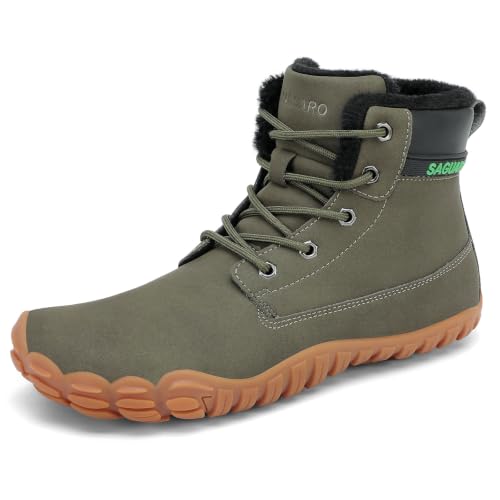
SAGUARO Adult Warm Barefoot Winter Boots, Wide Toe Box Hiking Boots | Faux Fur Lined Winter Barefoot Shoes,Water-Resistant Upper,Minimalist Barefoot Zero-Drop Sole for Walking,Outdoor W 8/M 6.5
Check price on Amazon
Vivobarefoot Women's Tracker Leather AT II Hiking Boots, Bracken, 8 | Cotton Canvas Lining, Removable Thermal Insole, All-Terrain Lug Outsole
Check price on Amazon
Xero Shoes Men's Denver II Hiking Boots, Rawhide, 10
Check price on Amazon
FEFELUIS Men's Barefoot Boot - Zero Drop Wide Toe Minimalist Sneakers Ankle Support Hiking Shoes DK Gray Size 9
Check price on Amazon
SAGUARO Adult Barefoot Winter Hiking Boots, Wide Toe Box Winter Boots | Warm Barefoot Snow Boots,Waterproof Upper,Flexible Traction for Snowy Sidewalks and Winter Commute,Travel W 11/M 10
Check price on Amazon
HOBIBEAR Barefoot Boots Zero-Drop Wide Width Minimalist Shoes Unisex Mid Top Walking Boots(Dark Brown Women 11,Men 10)
Check price on AmazonFinal Thoughts on Barefoot Hiking Boots
Barefoot hiking boots aren't a passing trend — they're a deliberate return to natural movement. For hikers willing to transition gradually, they can unlock stronger feet, better balance, and a more connected trail experience. For others, they may be a specialized tool for easy trails rather than a full replacement for traditional boots.
The key is honest self-assessment: know your foot health, your terrain, and your willingness to adapt. If you decide barefoot is right for you, start slow, listen to your body, and enjoy the journey. If you need more support or protection, explore our guides on men's hiking boots with a wide toe box and hiking boots for women with ankle support to find a middle ground.