
Pull On Work Boots: Comfort, Safety & Convenience
Discover why pull on work boots are a top choice for tradespeople, farmers, and outdoor workers. Our comprehensive guide covers everything you need to make an informed decision.
VIEW TOP PICKSWhy Choose Pull On Work Boots? Pull on work boots, also known as slip-on or Wellington boots, offer a unique blend of convenience, comfort, and safety. Unlike laced boots, they can be put on and taken off in seconds, making them ideal for workers who are constantly on the move. Whether you're in construction, agriculture, landscaping, or warehousing, a good pair of pull on work boots can significantly improve your daily comfort and productivity.
Why Pull On Work Boots Are a Smart Choice
When you're on a job site, time is money. Pull on work boots are designed for efficiency. There are no laces to tie, no buckles to fasten—just slip your foot in and go. This is particularly beneficial for workers who need to frequently transition between indoor and outdoor environments, or for those who wear protective gear like coveralls or waders. Beyond convenience, modern pull on work boots are engineered with advanced materials and construction techniques to provide excellent support, durability, and protection against workplace hazards.
For those who appreciate the classic aesthetic, many pull on work boots feature traditional western styling. If you're looking for a boot that transitions seamlessly from the job site to a night out, you might want to explore our guide to western wear boots, which offer a similar ease of use with a distinctive look.
Key Features to Look For in Pull On Work Boots
Safety Toe Protection
Many pull on work boots come with a steel, composite, or alloy safety toe. This is a critical feature for industries where heavy objects may fall. If you need enhanced protection for the top of your foot, consider looking into metatarsal guards that can be added to your boots.
Slip Resistance
The outsole is one of the most important components. Look for boots with a slip-resistant and oil-resistant outsole, especially if you work in kitchens, oil fields, or on wet surfaces. A deep tread pattern will provide better traction on uneven terrain.
Electrical Hazard (EH) Protection
If you work around live electrical circuits, EH-rated boots are essential. These boots are designed to insulate against electrical shock and are a crucial safety feature for electricians and utility workers.
Waterproof Materials
For outdoor work in wet conditions, waterproof materials are a must. Full-grain leather is naturally water-resistant, while boots with a waterproof membrane like Gore-Tex offer superior protection. For the ultimate in wet-weather performance, you might consider a pair of waterproof duck boots which are specifically designed for muddy and slushy conditions.
Comfort & Support
Look for boots with cushioned insoles, moisture-wicking linings, and good arch support. A pull on boot should fit snugly around the ankle and heel to prevent slippage. If you have specific foot health concerns, our guide to orthopedic work boots can help you find options that prioritize comfort and support.
Durability & Construction
The construction method matters. Goodyear welt construction allows for resoling, extending the life of your boots. Look for reinforced stitching at stress points and high-quality leather that can withstand daily wear and tear. To keep your boots in top condition, regular maintenance is key—our guide on oiling boots will show you how to properly care for leather footwear.
Top Rated Pull On Work Boots
⚠️ AFFILIATE DISCLOSURE: This website contains affiliate links. As an affiliate Associate, we earn from qualifying purchases. If you make a purchase through these links, we may receive a small commission at no additional cost to you. Read our full affiliate policy.

ROCKY Original Ride Roper Western Boot, Trail Brown, Size 10(M)
Check price on Amazon
Wolverine Men's Floorhand Waterproof 10" Steel Toe Work Boot, Dark Brown, 12 W US
Check price on Amazon
Wolverine Mens Rancher Wp St 10in Work Boot, Black/Brown, 10.5 X-Wide US
Check price on Amazon
NORTIV 8 Steel Toe Cowboy Boots for Men,Camel,12 | Waterproof Pull on Wellington Western Cowboy Boots for Men with Full-grain Leather for Construction Farming Bronco Stormrider
Check price on Amazon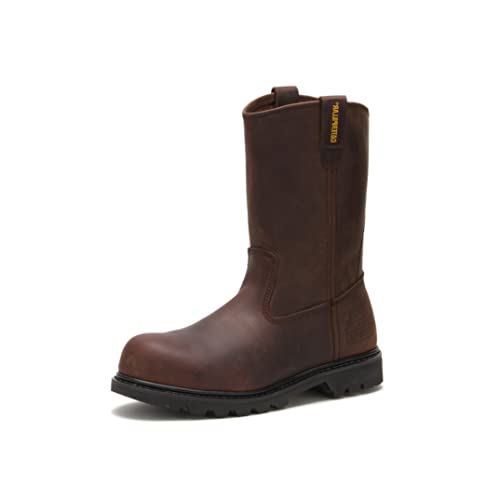
CAT Men's Revolver Pull-on Steel Toe Construction Boot, Brown, 9
Check price on AmazonBuying Guide: How to Choose the Perfect Pull On Work Boots
Choosing the right pair of pull on work boots involves more than just finding your size. It's about matching the boot's features to your specific work environment and personal needs. Start by identifying the primary hazards of your job: are there heavy objects, electrical risks, slippery surfaces, or extreme temperatures? This will determine the safety features you need, such as a safety toe, EH rating, or insulation.
Next, consider the fit. A pull on boot should feel snug when you put it on—your heel should not lift excessively when you walk. The instep should be tight enough to hold your foot securely, but not so tight that it's uncomfortable. Remember that leather will stretch slightly over time, so it should feel snug but not painful initially. For those who prefer a more modern and sleek aesthetic for everyday wear, a pair of stretch leather boots can offer a comfortable and stylish alternative.
Finally, think about the materials and construction. Full-grain leather is durable and breathable, while synthetic materials may be lighter and more water-resistant. The outsole should match your work surface—a softer rubber for grip on smooth floors, a harder rubber for durability on rough terrain. If you work in cold climates, consider insulated boots. And if you're looking for a stylish option that can handle light work, a pair of brown Chelsea boots for men can be a versatile choice.
Pros and Cons of Pull On Work Boots
Advantages
- Extremely convenient and quick to put on and take off
- No laces to break or come untied, reducing tripping hazards
- Comfortable for all-day wear, especially if you have a high instep
- Often more breathable than laced boots
- Easy to clean and maintain
- Available in a wide range of styles, from classic to modern
Disadvantages
- Less adjustable than laced boots, so fit is critical
- Can be less secure around the ankle if not properly fitted
- May not provide as much ankle support as high-top laced boots
- Heel slippage can be an issue for some foot shapes
- Not ideal for extremely rugged terrain where maximum ankle stability is needed
Related Guides & Inspiration
Finding the Right Fit for Your Boots
Fit is everything. Learn how to measure your feet accurately and choose the right size for different boot styles.
Read More →How to Break In Your New Work Boots
Don't let a new pair of boots ruin your day. Follow our simple steps to break them in comfortably and quickly.
Read More →Work Boots: A Complete Safety Guide
Understand safety standards, toe ratings, and the features that matter most for different job sites.
Read More →