
Top Rated Work Boots for Standing on Concrete
Discover the best work boots engineered for all-day comfort on hard concrete surfaces. Expert-tested picks for cushioning, arch support, and slip resistance.
SEE OUR TOP PICKSStanding on concrete all day is brutal on your body. Unlike softer surfaces that absorb some of the impact, concrete sends every step's force directly up through your feet, knees, and lower back. Over an 8 to 12-hour shift, this repetitive stress can lead to plantar fasciitis, heel spurs, and chronic joint pain. The right work boots for standing on concrete aren't just a comfort upgrade—they're essential protective equipment for your long-term health.
Why Your Boot Choice Matters on Concrete
When you stand on concrete, your feet absorb roughly three times the ground-reaction force compared to walking on grass or carpet. Without proper cushioning and support, that force travels straight into your plantar fascia and Achilles tendon. Workers in construction, warehousing, and manufacturing report heel pain that often starts within weeks of switching to a new pair of unsupportive boots.
The best work boots for concrete floors share a few critical features: a shock-absorbing midsole, a rigid shank that prevents arch collapse, and a slip-resistant outsole that maintains grip on smooth surfaces. If you have existing foot conditions like plantar fasciitis, choosing boots with removable insoles is essential so you can add custom orthotics without compromising the safety rating.
What to Look For in Concrete Work Boots
🛡️ Shock-Absorbing Midsole
Polyurethane or EVA midsoles with compression layers absorb the constant impact of hard floors, reducing fatigue throughout your shift.
🦶 Rigid Arch Support
A full-length steel or fiberglass shank keeps your arch from collapsing under sustained pressure, preventing plantar fascia strain.
👟 Slip-Resistant Outsole
Look for ASTM F2913-rated soles with a coefficient of friction above 0.5, especially important on smooth or polished concrete.
🔄 Wedge or Flat Sole
Wedge soles provide a larger contact patch on flat surfaces, improving stability and weight distribution compared to deep lug treads.
🌬️ Breathable Lining
Moisture-wicking linings prevent sweat buildup during long shifts, reducing blister risk and fungal issues.
📏 Proper Fit with Toe Room
Your feet swell during the day. Choose boots with a wide toe box and room for cushioned socks without cramping.
⚡ Safety Toe Considerations for Concrete Work
If your job site requires safety toes, you have options. Steel toes offer maximum protection and are the most common choice. Composite toes are lighter and don't transfer cold in winter, making them ideal for electrical hazard environments. Both meet ASTM F2413-18 standards for impact and compression resistance. Whichever you choose, ensure the boot has a removable insole if you plan to use custom orthotics.
Best Work Boots for Standing on Concrete
⚠️ AFFILIATE DISCLOSURE: This website contains affiliate links. As an affiliate Associate, we earn from qualifying purchases. If you make a purchase through these links, we may receive a small commission at no additional cost to you. Read our full affiliate policy.

WOLVERINE Men's Floorhand Waterproof Steeltoe 6" Work Boot, Dark Brown, 10M
Check price on Amazon
Timberland PRO Men's Pit Boss 6 Inch Steel Safety Toe Industrial Work Boot, Brown-2024 New, 10.5 W
Check price on Amazon
Wolverine Men'sOverpass 6" Mid Composite Toe Waterproof Work Boot, Summer Brown, 13 X-Wide
Check price on Amazon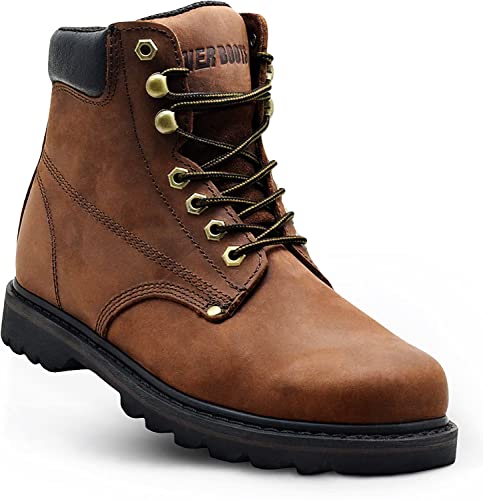
EVER BOOTS Tank Men's Soft Toe Oil Full Grain Leather Work Boots Construction Rubber Sole (10.5 D(M), Darkbrown)
Check price on Amazon
Ablanczoom Steel Toe Boots For Men: Comfortable Safety Industrial Construction Work Boot for Waterproof Slip Resistant Indestructible Puncture Proof Shoes
Check price on Amazon
WOLVERINE mens Floorhand 6 Inch Waterproof Soft Toe-m Work Boot, Dark Brown, 9.5 US
Check price on Amazon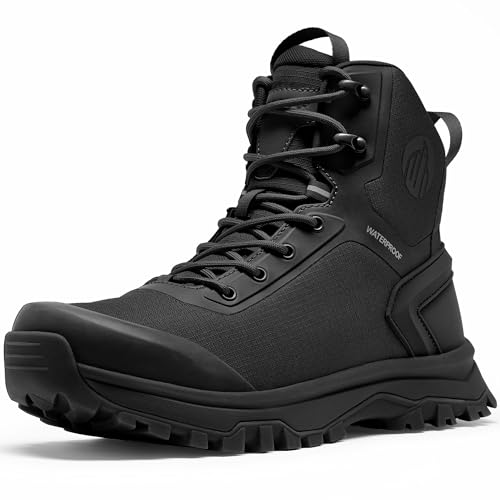
Coostar Tactical Boots for Men Lightweight Work Boot Side Zipper Waterproof | Military Combat Motorcycle Boots Outdoor Hiking All Day Comfort 8 Inches Black Size 11
Check price on Amazon
Waterproof Steel Toe Boots For Men Safety Work Shoes,Brown,Size 11 | Mens 6 Inch Comfortable Construction Work Boots Lightweight Industrial Boot Non Slip Resistant Rubber Sole For All Day Work
Check price on AmazonComparing Boot Types for Concrete Floors
Different jobs on concrete demand different boot builds. A warehouse picker who walks miles each shift has different needs than a machine operator who stands in one spot. Here's how the main categories break down:
- Wedge Sole Moc Toe Boots: Ideal for concrete finishing, warehouse work, and any job with flat surfaces. The wedge sole maximizes contact area for stability and reduces pressure points. Look for models with Goodyear welt construction if you want resolability.
- Cushioned Athletic-Style Work Boots: Best for workers who walk long distances on concrete. These prioritize lightweight comfort and energy return, often using EVA or polyurethane foam midsoles.
- Steel Toe with Rigid Shank: Essential for construction and demolition where impact protection is mandatory. The rigid shank prevents the boot from flexing mid-arch, keeping your foot stable on rebar and pallets.
- Slip-On Style with Cushioning: Good for workers who need quick on-and-off and don't require maximum ankle support. Look for models with shock-absorbing heel pods.
💡 Pro Tips for All-Day Concrete Comfort
- Upgrade your insoles. Even premium boots benefit from aftermarket insoles with gel or memory foam. Look for arch support that matches your foot shape. A good pair can transform a mediocre boot into an all-day comfort machine.
- Wear moisture-wicking socks. Cotton holds sweat against your skin, causing blisters and discomfort. Merino wool or synthetic blends keep feet dry and reduce friction.
- Take micro-breaks. Shift your weight, do calf raises, or sit for a few minutes every hour if possible. This restores circulation and reduces cumulative fatigue.
- Rotate your boots. If you can afford two pairs, alternating them gives each pair time to dry and decompress, extending their lifespan and keeping your feet fresher.
- Replace worn insoles and boots. When the midsole foam collapses or the tread wears smooth, the boot loses its protective value. Replace insoles every 3-6 months and boots when the sole is compromised.
Frequently Asked Questions
How much should I spend on work boots for concrete?
Quality work boots for concrete typically range from $150 to $250. At this price point, you get proper cushioning, a rigid shank, and durable outsoles. Budget boots under $100 often skimp on midsole quality and wear out quickly on hard surfaces. If you're on concrete 40+ hours per week, the investment pays off in reduced pain and longer boot life. For heavy-duty options with advanced shock absorption, expect to pay $200+.
Are steel toe boots good for standing on concrete all day?
Steel toe boots provide essential protection, but they can feel cold in winter and add weight. The toe material itself doesn't affect cushioning—that comes from the midsole and insole. Look for steel toe boots with a cushioned midsole and removable insole so you can customize the fit. Composite toe boots are a lighter alternative that still meets ASTM safety standards. Some workers with flat feet find composite toes more comfortable for long shifts.
Can I wear work boots for concrete without safety toes?
Yes, if your employer doesn't mandate safety toes. Many warehouse, retail, and light manufacturing jobs don't require protective toe caps. Soft-toe boots are lighter and often more comfortable for extended standing. The key is still finding a boot with good cushioning, arch support, and a slip-resistant sole. If you're unsure about your workplace requirements, check with your supervisor or safety officer.
How often should I replace work boots used on concrete?
Most quality work boots last 6 to 12 months with daily wear on concrete. Signs it's time to replace: the midsole feels flat or compressed, the tread is worn smooth, the upper is cracking or separating, or you're experiencing foot pain that wasn't there when the boots were new. If the boot is resolable and the upper is in good condition, a cobbler can replace the sole for a fraction of the cost of new boots. For waterproof boots, replace them once the membrane fails and your feet get wet.
Do I need special insoles for concrete work?
Yes, upgrading insoles is one of the most cost-effective ways to improve comfort on concrete. Look for insoles with firm arch support and a cushioned heel cup. Gel or memory foam can help, but the priority is arch support—without it, your plantar fascia bears the brunt of every step. If you have specific foot conditions, a podiatrist can recommend custom orthotics. Just make sure your boots have a removable insole to accommodate them.